
Last updated November 2, 2026
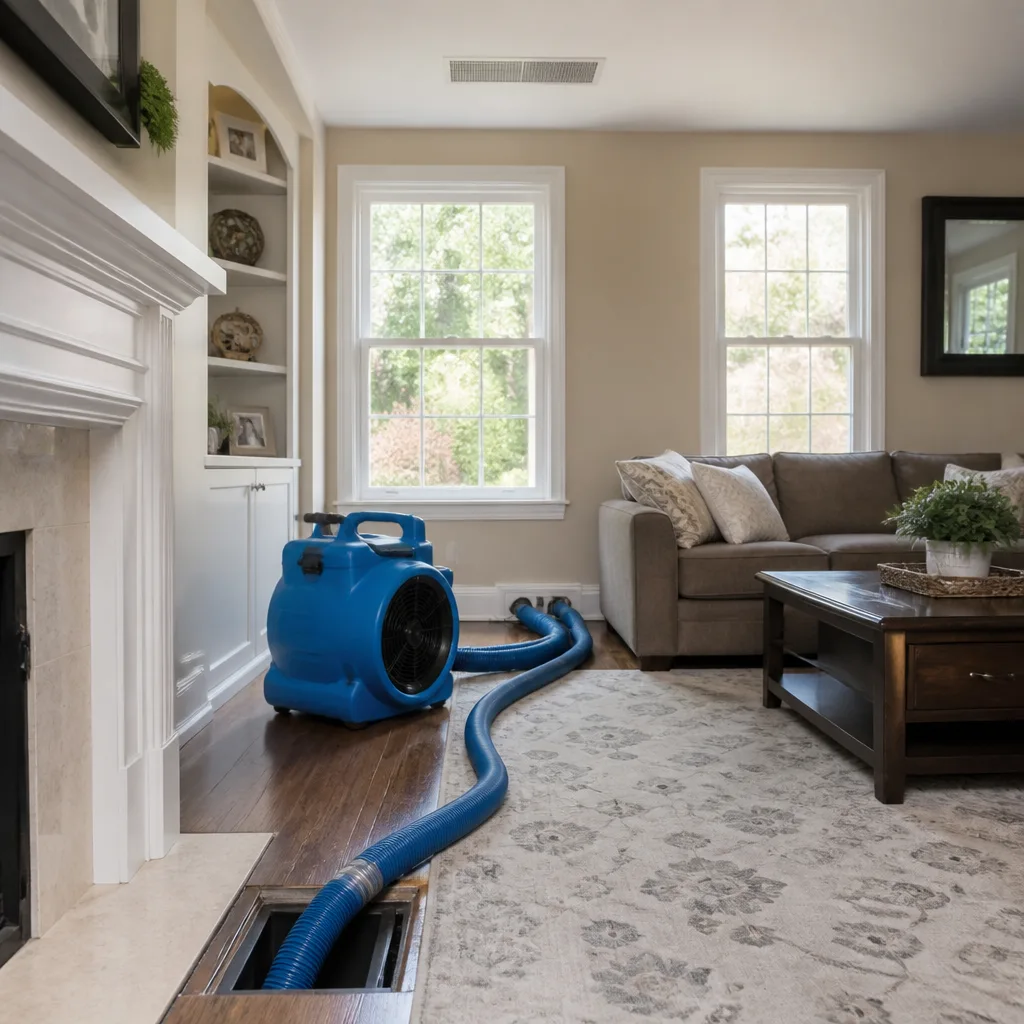 Whole-home duct cleaning
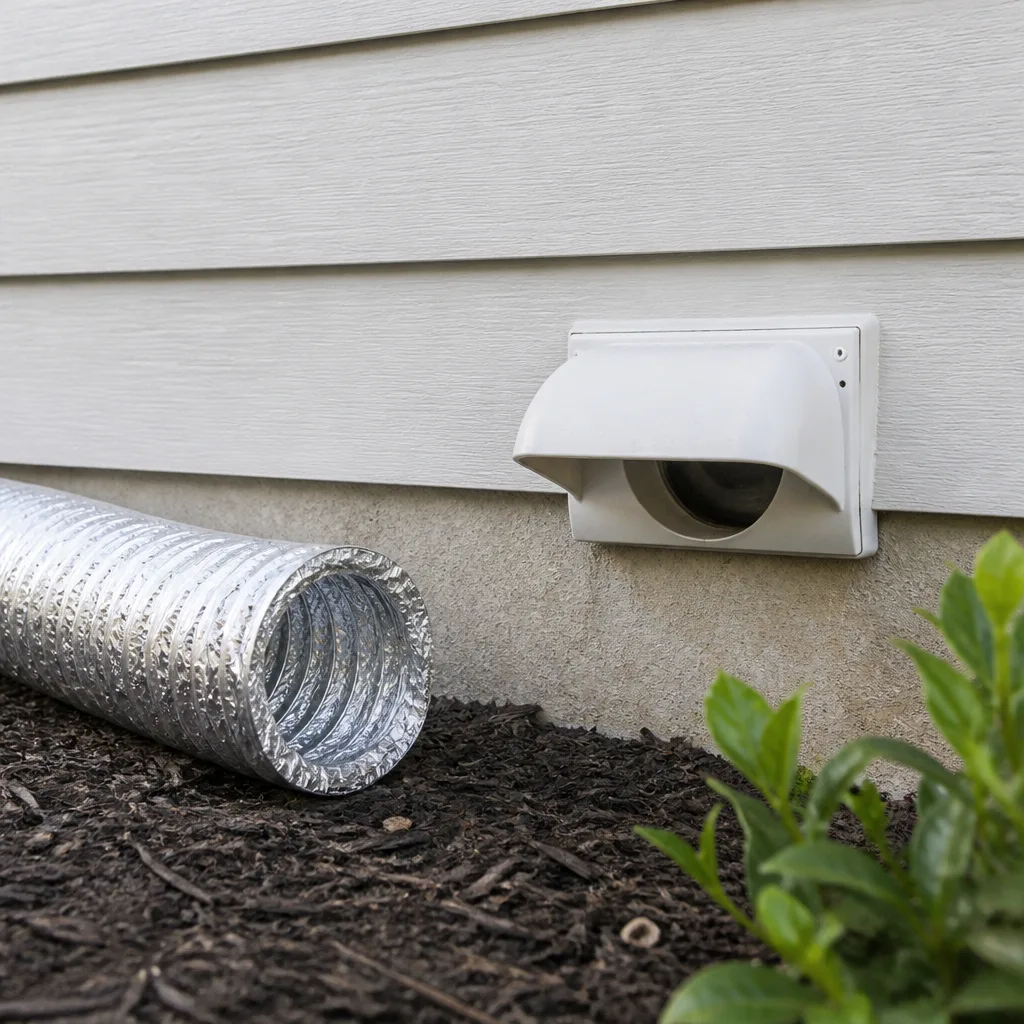 Dryer vent cleaning
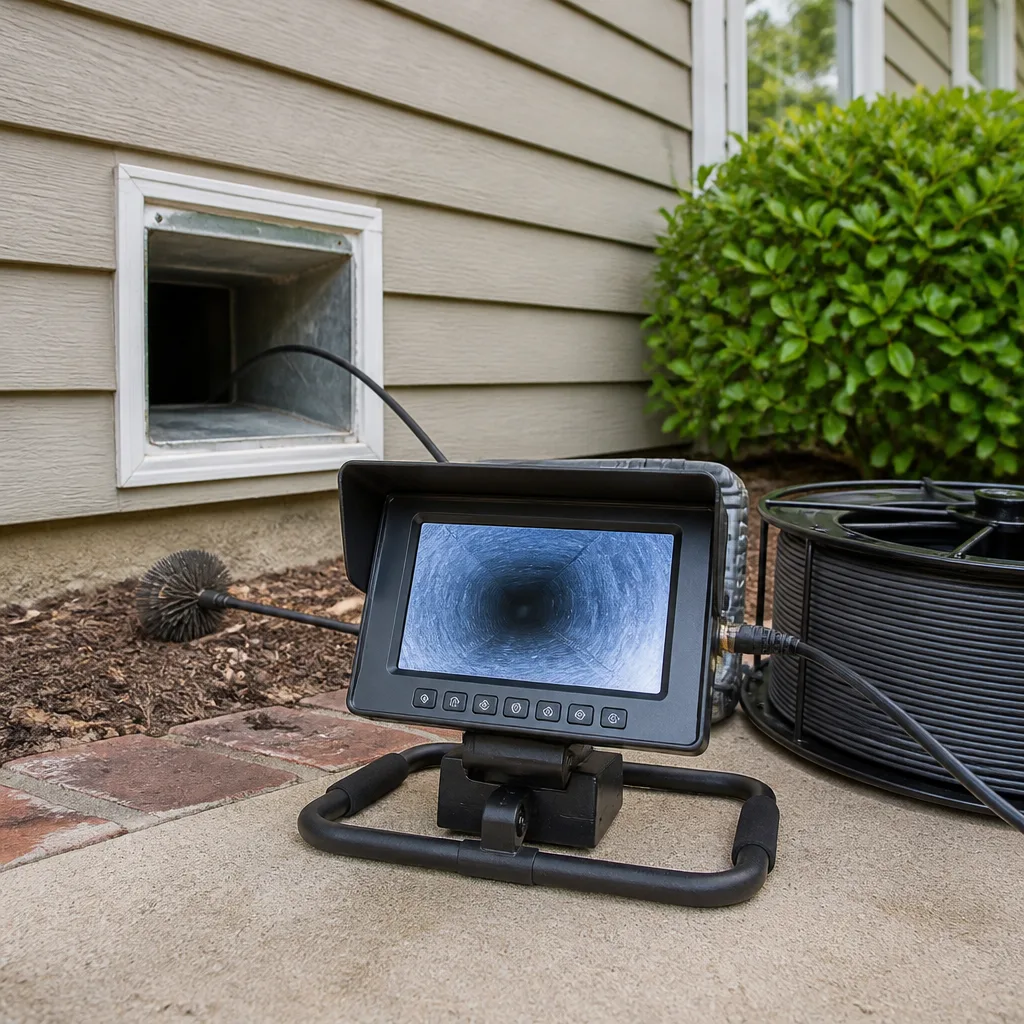 Camera inspection
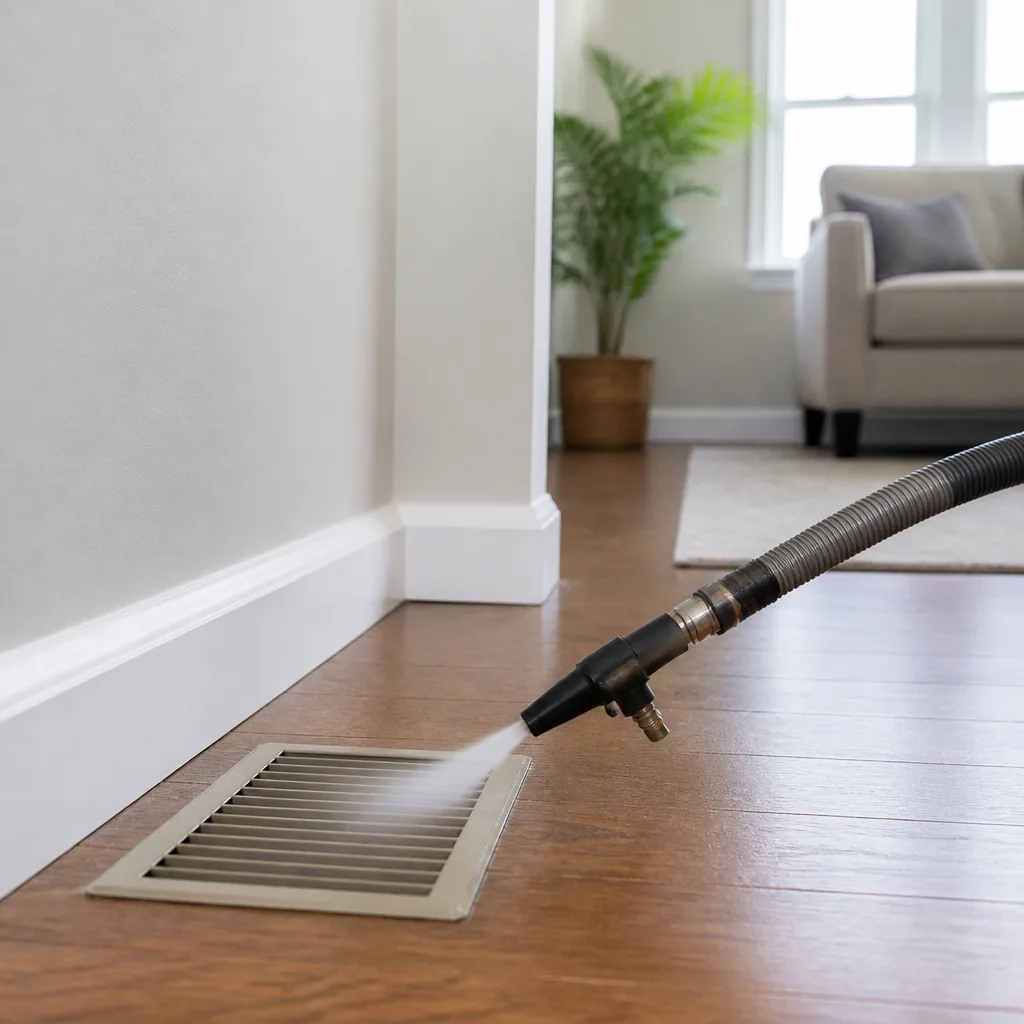 Sanitizing & deodorizing
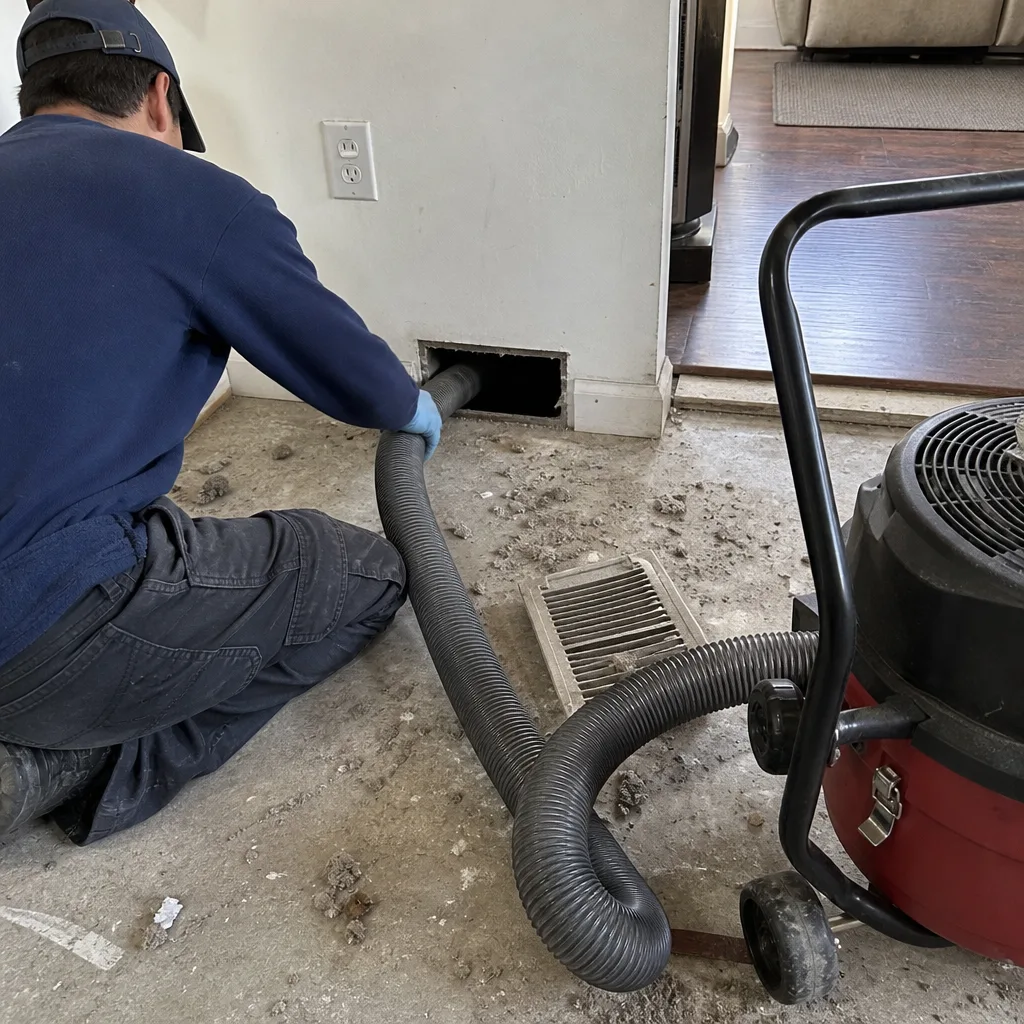
Whole-system duct and dryer vent check with before-and-after photos - you see exactly what came out of your vents
That "$99 whole-house special" is a bait ad - the real number appears once they are in your hallway, or the "clean" is a shop-vac at the register. We photograph the inside of your ducts before and after instead.
Air Duct Cleaning Emergency Preparedness Guide for Santa Clara Homes
During the August 2020 lightning complex fires, Santa Clara County woke up to a sky the color of burnt copper. Tens of thousands of homeowners closed their windows, switched their HVAC fans to “on,” and assumed they were safe. Many weren’t. The problem wasn’t their filter. It was their ductwork. Gaps, loose connections, and pinhole leaks in duct runs meant outside air was bypassing the filter entirely, pulling smoke directly into living rooms and bedrooms. This guide walks you through what to do before, during, and after a wildfire smoke event in Santa Clara. You’ll learn how to assess your system’s readiness now, how to operate it correctly when the AQI climbs past 150, and how to evaluate whether smoke actually got inside your ducts.
Quick Answer
Wildfire smoke preparedness for Santa Clara homes comes down to three things: sealing the duct system so unfiltered air can’t bypass your filter, running the correct HVAC protocol during the event, and inspecting for smoke residue within 48 hours after the air clears. A MERV 13 filter combined with leak-free ductwork gives you real protection during smoke events. If your ducts have leaks or accumulated debris, smoke particles will find their way in regardless of what filter you install – this is where professional Air Duct Cleaning services can make a critical difference before fire season hits.
Styles & brands we work with
- Whole-home duct cleaning
- Dryer vent cleaning
- Camera inspection
- Sanitizing & deodorizing
Table of Contents
- Why Smoke Events Are a Different Kind of Emergency
- Pre-Season: How to Assess Your Duct System Before Smoke Season
- MERV Ratings and Smoke: What Actually Works
- During a Smoke Event: The Correct HVAC Operating Protocol
- What Smoke Contamination Looks Like Inside Ductwork
- Post-Event: The 48-Hour Assessment Window
- Why Post-Smoke Cleaning Is Not the Same as Routine Cleaning
- Documenting Smoke Infiltration for Insurance Purposes
Why Smoke Events Are a Different Kind of Emergency
Santa Clara sits in a geographic bowl. When wildfire smoke settles over the South Bay, it tends to stay. The marine layer that normally cleans our air in the summer can trap smoke close to the ground for days, even when the fires are burning a hundred miles north in Butte County or east in the Sierra foothills. That persistence is what makes smoke a duct system problem, not just an outdoor air problem.
A routine dust load inside ductwork is inert. It sits there. Smoke residue is different. Wildfire smoke contains volatile organic compounds, oils from burned vegetation and structure materials, and fine particulate matter down to 0.3 microns. When that residue deposits inside your ducts, it doesn’t just sit. It off-gasses over time. Homeowners in neighborhoods like Willow Glen and the Rose Garden have reported that “campfire smell” lingering for weeks after the sky cleared. That smell is coming from inside their system.
We’ve inspected ducts after smoke events where the interior walls of the supply runs looked fine to the naked eye, but a white cloth wipe came back yellow-brown. That’s not normal dust. That’s condensation-bound smoke particulate that will keep releasing odor until it’s removed. Understanding this difference, between inert dust and active smoke residue, is the foundation of everything else in this guide.
Pre-Season: How to Assess Your Duct System Before Smoke Season
You can’t make good decisions during a smoke emergency if you don’t know the condition of your duct system beforehand. Most Santa Clara homes have some duct leakage. The California Energy Commission has estimated that typical residential duct systems lose 20 to 30 percent of conditioned air through leaks. That same 20 to 30 percent represents outside air being pulled in during smoke events.
Here’s a simple assessment protocol you can run before fire season starts:
- Visual inspection at the registers. Remove a few supply registers and look inside with a flashlight. You’re checking for visible gaps where the register boot meets the drywall or the duct connects to the boot. In older Santa Clara ranch homes from the 1950s through 1970s, these connections are often loose.
- The tissue test. Turn the HVAC fan on, then hold a single-ply tissue near each register. It should flutter away. Then hold it near register edges and the gap around the register. If it gets sucked toward a seam or gap, air is being pulled in from outside the duct.
- The mechanical room inspection. Look at the return plenum where it connects to the air handler. Any unpainted sheet metal joints may be leaking. Run your hand along the edges with the system running; you’ll feel cool air movement on the return side where leaks pull unconditioned attic or garage air in.
- Check your return path. In many Santa Clara homes, the return side uses wall cavities or floor joist spaces instead of dedicated ductwork. These building cavities are notoriously leaky. If your return grille is on a wall near an attic access or garage door, outside air has a direct path in.
If any of these tests reveal gaps, the fix is not a different filter. The fix is sealing the ductwork. Our Air Duct Repair in Santa Clara service handles exactly this kind of sealing and structural work. It’s the difference between a system that filters smoke and one that just moves it around.
MERV Ratings and Smoke: What Actually Works
The particle size in wildfire smoke is the key to understanding filter ratings. Smoke particulate from burning vegetation and structures mostly falls between 0.3 and 2.5 microns. The standard fiberglass filter most homes in Santa Clara run, typically a MERV 4 or lower, catches particles down to about 10 microns. That’s basically decorative when it comes to smoke.
Here’s what actually matters for smoke protection:
- MERV 11: Catches 65-80% of particles in the 1.0 to 3.0 micron range. Minimum acceptable during smoke events. Some smoke will still get through.
- MERV 13: Catches 85-90% of the same range. This is the rating the California Air Resources Board recommends for smoke protection. It’s the sweet spot for most residential systems.
- MERV 16 or HEPA: High-level filtration but requires a system designed for the pressure drop. Retrofitting most Santa Clara homes for HEPA-level whole-house filtration is expensive and often unnecessary.
One critical note: a high-MERV filter only works if the air actually passes through it. If your duct system has leaks on the return side, unfiltered attic air will bypass the filter entirely. That’s why the pre-season duct assessment comes first. Filter upgrades without duct sealing is putting a better screen on a window with a hole in the wall.
Many newer Santa Clara homes have Honeywell or Aprilaire media cabinets that accommodate 4-inch or 5-inch thick filters. These are excellent platforms for MERV 13 media during smoke season. If you have one of these systems and aren’t sure what filter rating it’s currently running, check the filter frame. The MERV rating is printed on it.
During a Smoke Event: The Correct HVAC Operating Protocol
When the AQI in Santa Clara climbs past 150, the instinct for many homeowners is to run the HVAC fan continuously. That’s correct, but only under specific conditions. Here’s the protocol we recommend:
- Set the system to recirculation mode. Most HVAC systems in Santa Clara homes do not have a true fresh air intake, but some do, especially newer builds that meet California’s Title 24 ventilation requirements. If your system has a fresh air damper, close it during smoke events. Most standard systems simply recirculate indoor air, which is what you want.
- Run the fan continuously if you have a MERV 11 or better filter installed. This keeps air moving through the filter, progressively reducing indoor particulate levels. Set the fan switch on your thermostat from “Auto” to “On.”
- Do not run the fan continuously if you have a low-MERV filter. You’re just circulating smoke. In this scenario, shut the system down entirely and use portable air purifiers in occupied rooms.
- Do not run evaporative coolers. These are rare in Santa Clara given our climate, but if your home has one, shut it off. They pull unfiltered outside air directly into the living space.
- Do not open windows at night “to cool down.” Smoke particulate often settles lower overnight. Opening windows during a smoke event, even when the air looks clearer, reintroduces particulate that you spent all day filtering out.
One thing we hear from homeowners in neighborhoods like West San Jose and Cupertino-adjacent Santa Clara: “I ran the fan all day but the air still smells smoky.” That almost always points to return-side duct leakage. The fan is pulling smoky air from the attic into the system and distributing it through the house. If you’re running the correct protocol and still getting smoke infiltration, the problem is almost certainly in the duct system, not the filter.
What Smoke Contamination Looks Like Inside Ductwork
After a smoke event, the question every Santa Clara homeowner asks is: did smoke actually get into my ducts? Here’s how to tell the difference between normal dust accumulation and smoke contamination.
Visual indicators of smoke infiltration:
- Color. Normal household dust is gray or tan, dry, and accumulates mostly on the bottom of horizontal runs. Smoke residue is darker, more uniform, and coats all surfaces including the top and sides of ducts.
- Texture. Dust is loose and powdery. Smoke residue, especially when combined with the moisture that our Bay Area air carries during inversion layers, is sticky or waxy. It will smear if you touch it.
- Distribution pattern. Dust accumulates gradually over months. Smoke residue appears suddenly and coats ducts evenly along their entire length, following the airflow path from the return through the supply side.
- Odor. This is the most reliable indicator. Dust doesn’t smell like much. Smoke residue has a persistent campfire or acrid odor that intensifies when the system first kicks on after sitting idle. If you smell smoke in the first minute of system startup, that residue is inside the ducts or on the coil.
A practical test we perform during post-event inspections: run the system for five minutes, then turn it off and check the supply registers. If the register faces have a fine dark film that wasn’t there before the event, smoke particulate has made it through the system. If you smell smoke from the supply vents only while the system runs, that’s duct contamination. If you smell it constantly, it may have saturated soft goods and insulation as well.
Post-Event: The 48-Hour Assessment Window
The 48 hours after the sky clears in Santa Clara is your best window for evaluating smoke damage to your duct system. There are two reasons for this timeline. First, smoke residue is still fresh and identifiable. After a week of running the system, the residue gets redistributed, mixed with normal dust, and becomes harder to attribute to the event. Second, if you’re planning to file an insurance claim, documentation within this window strengthens your case considerably.
Here’s the post-event assessment protocol we recommend:
- Document the event. Screenshot AQI readings from PurpleAir or AirNow during the worst days. Note the dates, the peak AQI, and how long readings stayed above 150. This establishes the exposure window for insurance purposes.
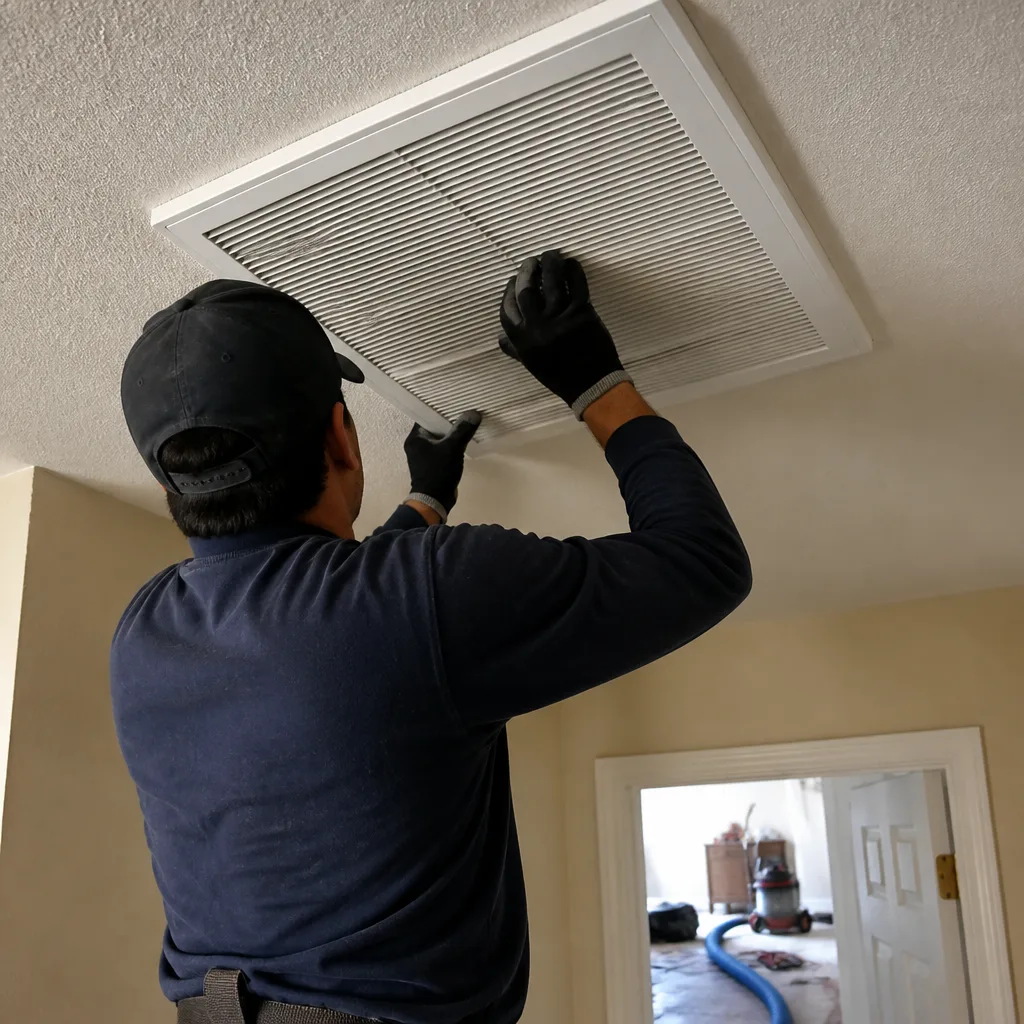
- Photograph register faces. Remove several supply registers and photograph the inside of the register boots before cleaning anything. Smoke infiltration shows up as a fine dark film on these surfaces.
- Perform the odor test. Run the system cold (no heat, no cooling, just the fan) for five to ten minutes. Walk through the house and note where you smell smoke. Check each room individually, especially rooms far from the air handler where particulate has more time to deposit.
- Inspect the filter. If you ran the system during the event, the filter will be visibly darkened. Photograph it. A filter that went from white to dark brown over a two-week period is documentation of what passed through your system.
- Check the return air path. If your return uses building cavities rather than dedicated ductwork, smoke may have deposited on framing lumber and drywall inside those cavities. This is harder to clean than smooth metal duct and often requires professional attention.
If your assessment turns up evidence of smoke infiltration, document everything before calling a professional. Photos of the filter, the register faces, and any visible duct interiors will help establish the scope of work needed.
Why Post-Smoke Cleaning Is Not the Same as Routine Cleaning
This is where Santa Clara homeowners need to be careful. A routine duct cleaning is a scheduled maintenance service. A post-smoke event cleaning is a contamination response. They are different jobs with different scopes, and if you don’t understand the difference, you may pay for work that doesn’t actually solve your problem. See our Air Duct Cleaning Permits, Codes & Inspections in CA: What You Need to Know to understand how regulations apply to each type of service.
A routine cleaning focuses on removing accumulated dust and debris from the duct interiors. Standard equipment, standard process, predictable outcome. A post-smoke cleaning needs to address residue that has adhered to duct surfaces, collected on the cooling coil, and potentially deposited inside the blower assembly. Smoke residue is sticky. It doesn’t respond to a simple brush pass.
Here’s what to ask a duct cleaning contractor after a smoke event in Santa Clara:
- “What process do you use for adhered residue, not just loose dust?” The answer should involve agitation beyond a standard brush. If they talk about a shop vac attached to a flexible hose, that’s not the right tool for this job.
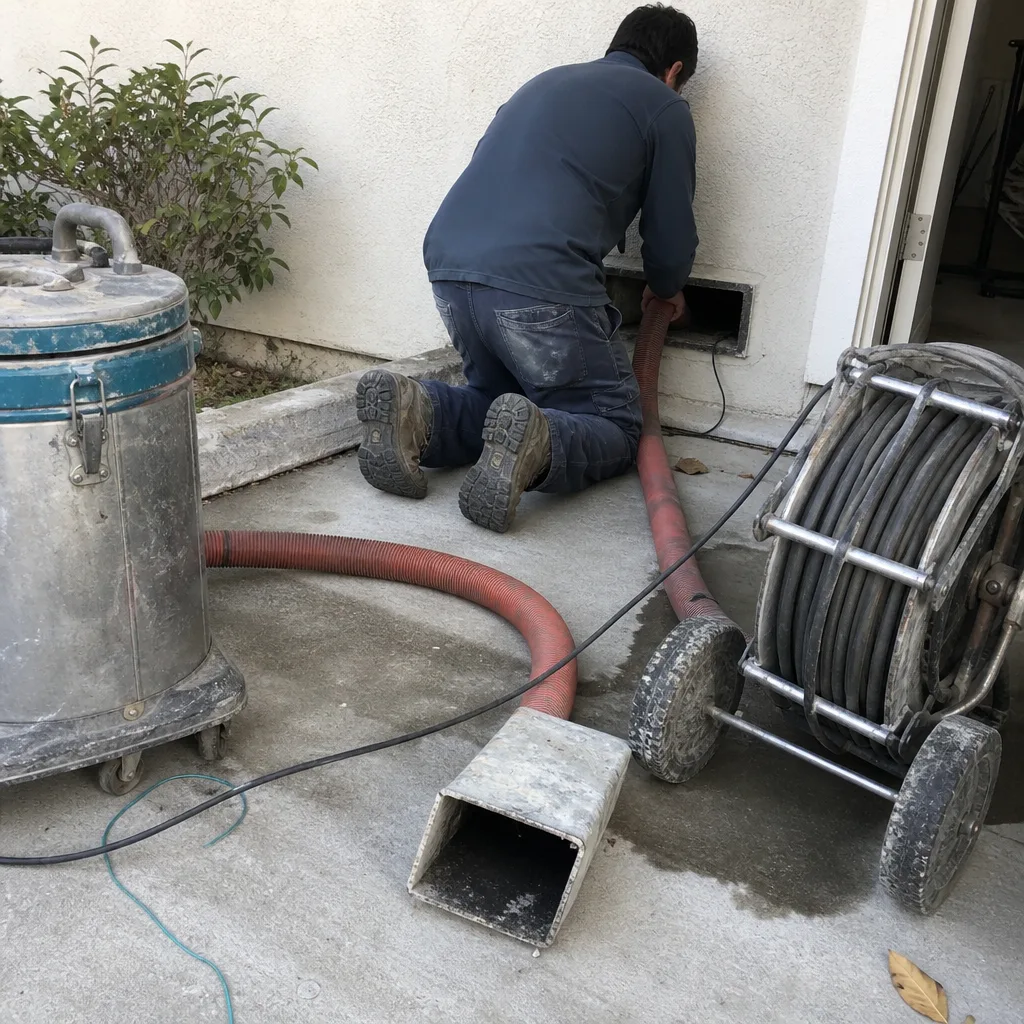
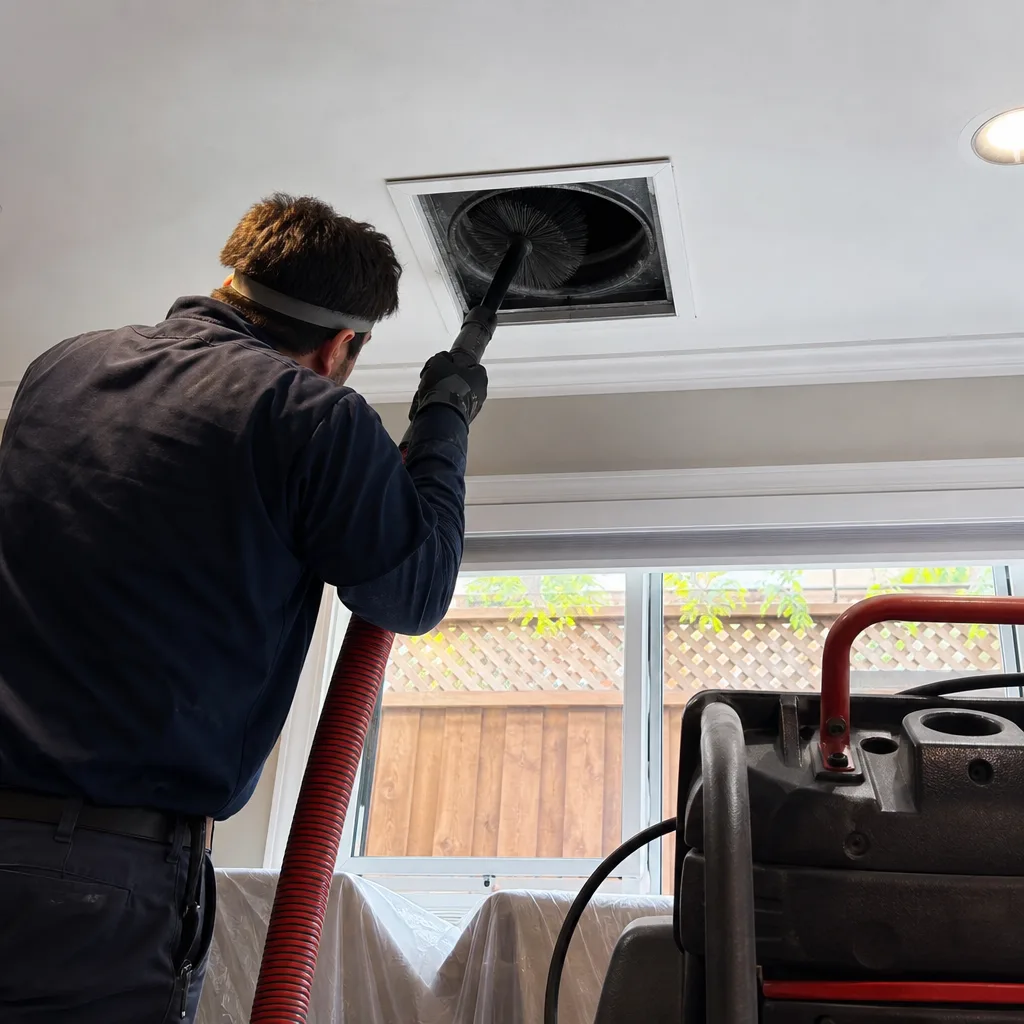
- “Do you use negative air containment during the cleaning?” Proper duct cleaning uses a powerful vacuum system to keep dislodged material from re-entering the living space. For post-smoke work, this is non-negotiable.
- “Do you inspect and clean the coil? The evaporator coil is a magnet for smoke particulate. If it’s not addressed, the system will continue to distribute smoke odor even after the ducts are clean.
- “Can you document the work with before and after photos?” After a smoke event, especially if an insurance claim is involved, you need photographic documentation of the contamination and the cleaning results.
We perform post-smoke and post-remediation duct work using the same class of equipment that restoration contractors use. Our Air Duct Cleaning in Santa Clara service includes agitation and extraction systems designed for contamination work, not just routine maintenance. The distinction matters.
Documenting Smoke Infiltration for Insurance Purposes
Smoke damage claims for duct systems in Santa Clara are viable but require better documentation than most homeowners provide. Insurance adjusters see smoke damage claims after every major fire season, and they’ve heard every story. What moves a claim forward is evidence, not narrative.
Here’s how to build a documentation package that gives your claim the best chance:
- Event timeline. Write down the dates the smoke was present over Santa Clara. Include AQI readings from your specific area. Screenshot them rather than just noting the numbers; screenshots carry timestamps that can’t be argued with.
- Photographic evidence. Photos of the filter before and after, register faces, inside duct runs visible from removed registers. Date-stamp everything.
- Professional assessment. A written evaluation from a duct cleaning company that inspected the system post-event. This should detail what was found, where, and what remediation is recommended. Insurance companies give far more weight to a third-party professional assessment than to a homeowner’s description.
- Receipts and service records. If you had a pre-season inspection or duct repair done before the event, include those records. They establish the system’s condition before exposure, which strengthens the causal link between the smoke event and any damage found after.
- Deductible math. A full post-smoke duct cleaning in Santa Clara typically runs $500 to $1,200 depending on system size and contamination level. Check your deductible before filing. If your deductible is $1,000 and the cleaning is $700, filing may not be worth the claim history.
One note from our experience: insurance companies are far more likely to approve cleaning and deodorization than replacement. If you’re hoping for a full duct replacement, you’ll need evidence of significant, irreversible damage, which is uncommon in residential smoke events. Set expectations accordingly.
Common Mistakes to Avoid
- Running a low-MERV filter during a smoke event. A standard fiberglass filter catches perhaps 20% of smoke particulate. Running the fan continuously with one of these just circulates smoke faster. Upgrade to MERV 13 before fire season, not during it.
- Assuming closed windows mean protected air. Your duct system has more leakage than your windows do. A typical Santa Clara home with 20% duct leakage exchanges its entire interior air volume with attic air multiple times per day. Focus on duct sealing first.
- Waiting weeks to inspect for smoke contamination. After 7-10 days of system operation, smoke residue gets redistributed and mixed with normal dust. Documenting it as smoke-related becomes harder. The 48-hour window matters.
- Hiring a routine cleaning service for a contamination problem. If a duct cleaner doesn’t change their process for post-smoke work, they’re not doing post-smoke work. They’re doing routine cleaning on a contaminated system and charging you for the distinction.
- Skipping the coil inspection. The evaporator coil in your air handler collected the same smoke that your ducts did. Clean ducts with a fouled coil still distribute smoke odor. Ask specifically about coil cleaning in the scope.
- Using portable ozone generators as a substitute for cleaning. Ozone doesn’t remove particulate. It masks odor temporarily and can damage rubber and plastic components in your system. The residue has to come out, not get covered up.
- Filing an insurance claim without a professional assessment. An adjuster processing 500 claims from the same fire season isn’t going to take your word for it. A documented professional evaluation changes the conversation entirely.
See the difference
 Before
 After
 Before
 After
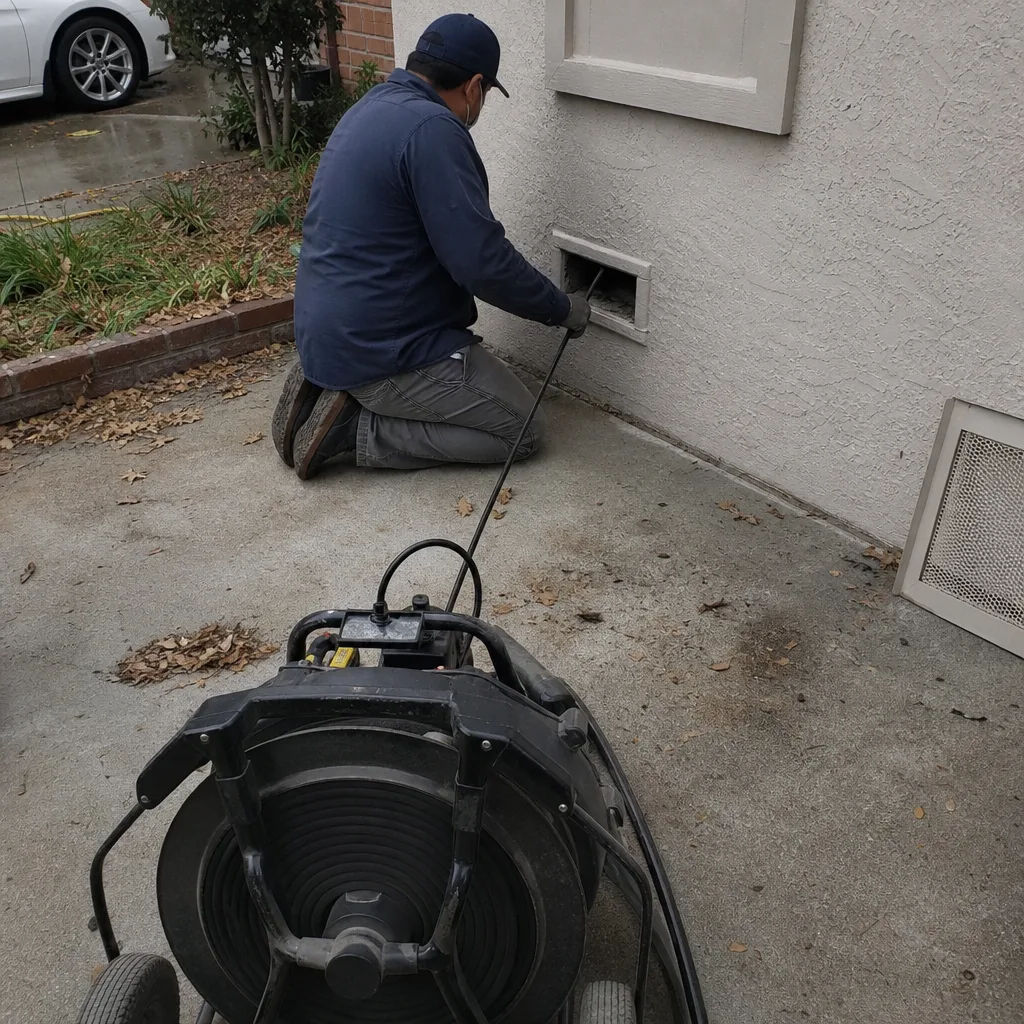 Before
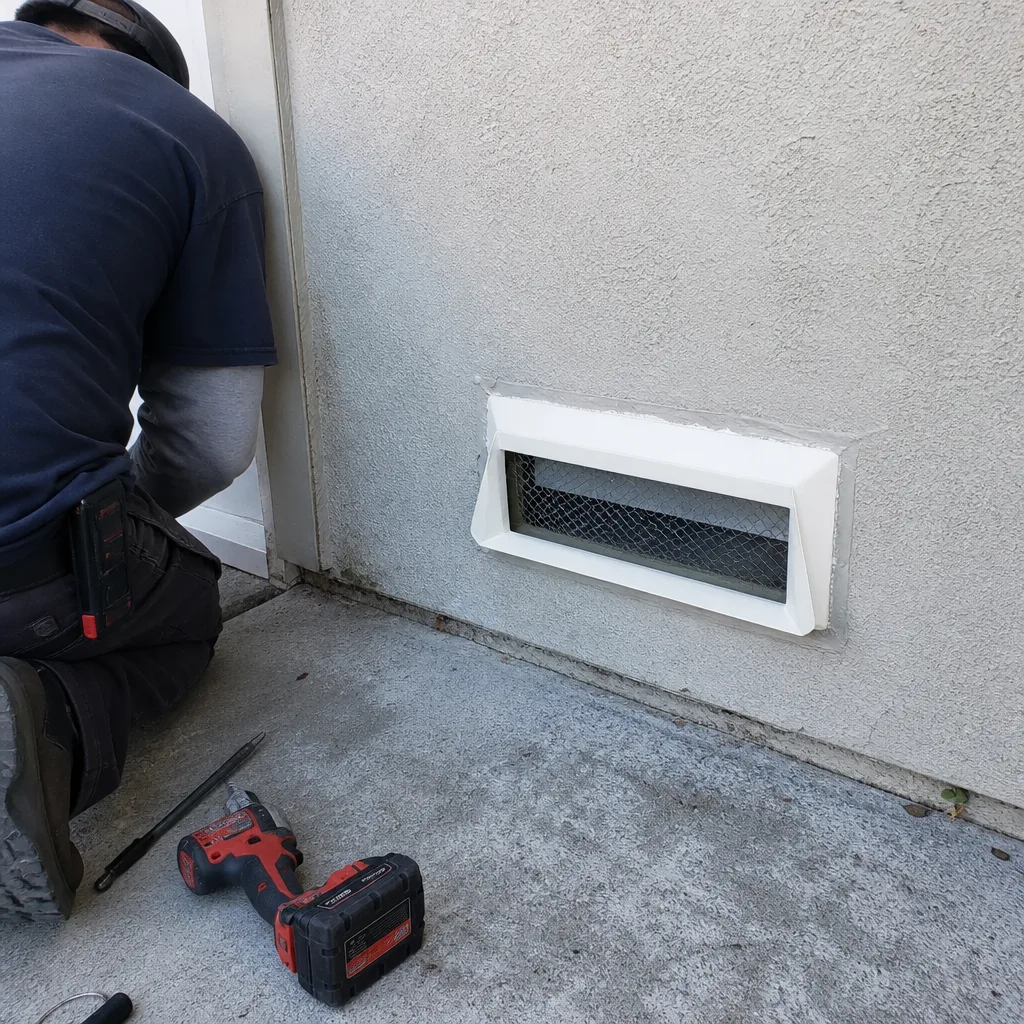 After
When to Call a Professional
If your post-event assessment found visible smoke residue inside duct runs, persistent smoke odor when the system runs, or a filter that changed color dramatically during the event window, you need a professional evaluation. If your home uses building cavities for return air paths, professional inspection is essential; these spaces are nearly impossible for a homeowner to assess thoroughly. And if you’re filing an insurance claim, get the professional evaluation before you file. Heritage Duct Cleaning offers free estimates in Santa Clara, call (855) 550-3778 to schedule a post-smoke assessment. We also provide Dryer Vent Cleaning in Santa Clara for homes where smoke infiltrated laundry areas; dryer vents pull outside air directly and are worth checking after heavy smoke exposure.
Frequently Asked Questions
Look for a fine dark or yellow-brown film on register faces and inside register boots, check whether your filter changed color during the smoke event, and run the system briefly to see if a campfire odor comes from the vents. In Santa Clara homes with leaky return ducts, smoke infiltration is common even when the system was operated correctly during the event.
MERV 13 is the rating recommended by the California Air Resources Board for residential smoke protection. MERV 11 is acceptable if your system can’t handle the pressure drop of a thicker filter, but anything below MERV 11 provides minimal smoke particulate capture. Most Honeywell and Aprilaire media cabinets accept 4-inch or 5-inch MERV 13 filters with no system modification needed.
Post-smoke duct cleaning in Santa Clara typically ranges from $500 to $1,200 for a standard single-family home, depending on system size, contamination level, and whether coil cleaning is included. This is higher than routine cleaning because it requires additional agitation for adhered residue, coil inspection and cleaning, and thorough post-work verification. Call (855) 550-3778 for an exact quote, estimates are free and include a full system evaluation.
For homes without pets, smokers, or recent renovation, every 3 to 5 years is reasonable. Homes that experience wildfire smoke exposure should be assessed after each significant event, even if a full cleaning isn’t warranted every time. The combination of Santa Clara’s otherwise mild climate and periodic heavy smoke exposure means most homes here benefit from an evaluation every 2 to 3 years. For more guides & resources on keeping your system protected year-round, visit our blog.
You can remove and wash the register faces, replace the filter, and wipe down accessible surfaces near the registers. You cannot effectively clean the interior of duct runs, the coil, or the blower assembly without professional equipment. Smoke residue is sticky and requires mechanical agitation combined with negative air extraction to remove properly. Half-measures here just stir the contamination around.
Some policies include coverage for smoke damage remediation, including duct cleaning, but approval depends on documentation. You need evidence that smoke entered the system during the event window, not just that you suspect it did. A professional evaluation with photos, written findings, and a clear scope of recommended work significantly improves claim approval rates. Check your deductible before filing; cleaning below your deductible may not be worth a claim.
The Bottom Line
Santa Clara homeowners face a specific risk profile that generic air quality advice doesn’t address: our geography traps wildfire smoke for extended periods, and our aging housing stock means most duct systems leak enough to bypass filters entirely. Prepare before fire season by assessing duct integrity and upgrading to MERV 13 filtration. Operate your system correctly during events by running recirculation with proper filtration and shutting down if you don’t have it. Act within 48 hours after the sky clears to document what happened and evaluate whether professional cleaning is warranted. The difference between a home that smells like smoke for a week and one that smells like smoke for six months is whether the duct system gets addressed correctly. Start with a professional assessment from Heritage Duct Cleaning home services, because knowing what happened inside your ducts beats guessing every time.
Written by the team at Heritage Duct Cleaning, serving Santa Clara since 2015.