
Last updated November 2, 2026
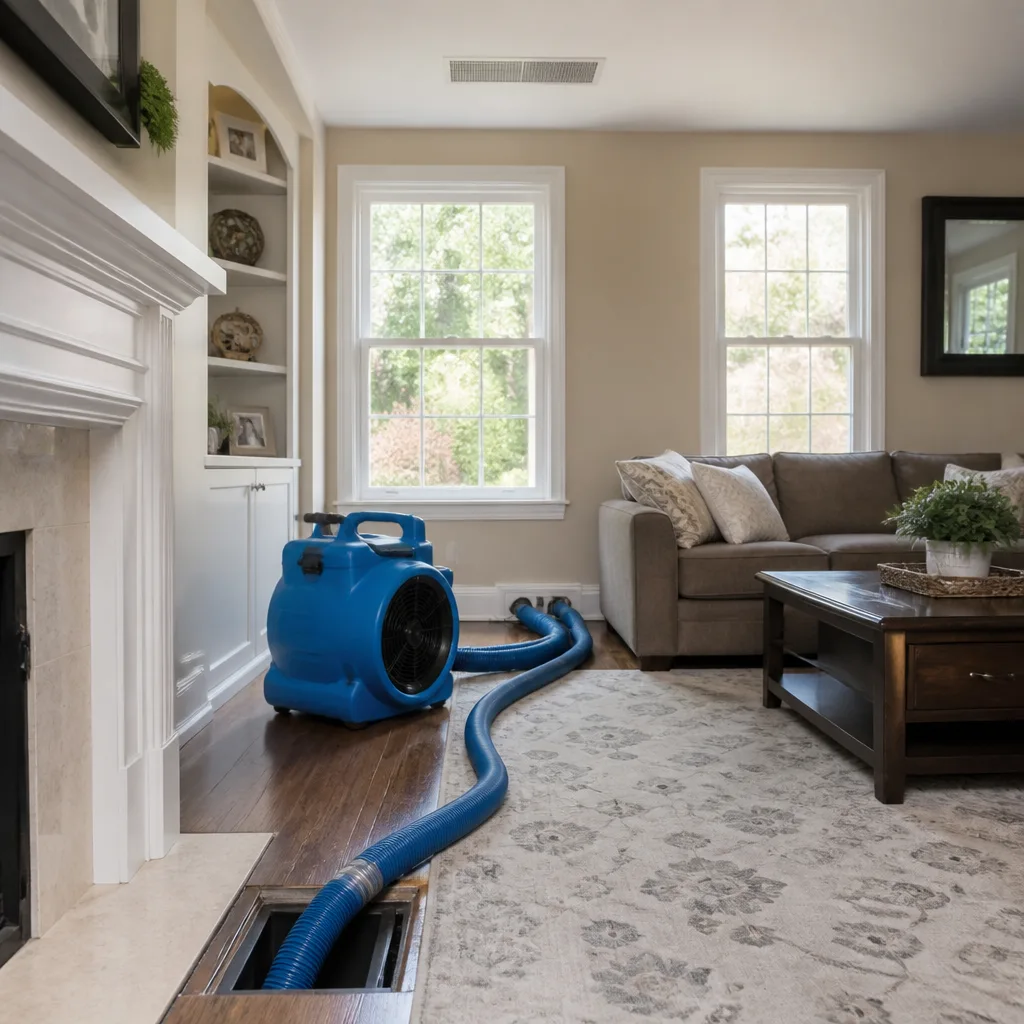 Whole-home duct cleaning
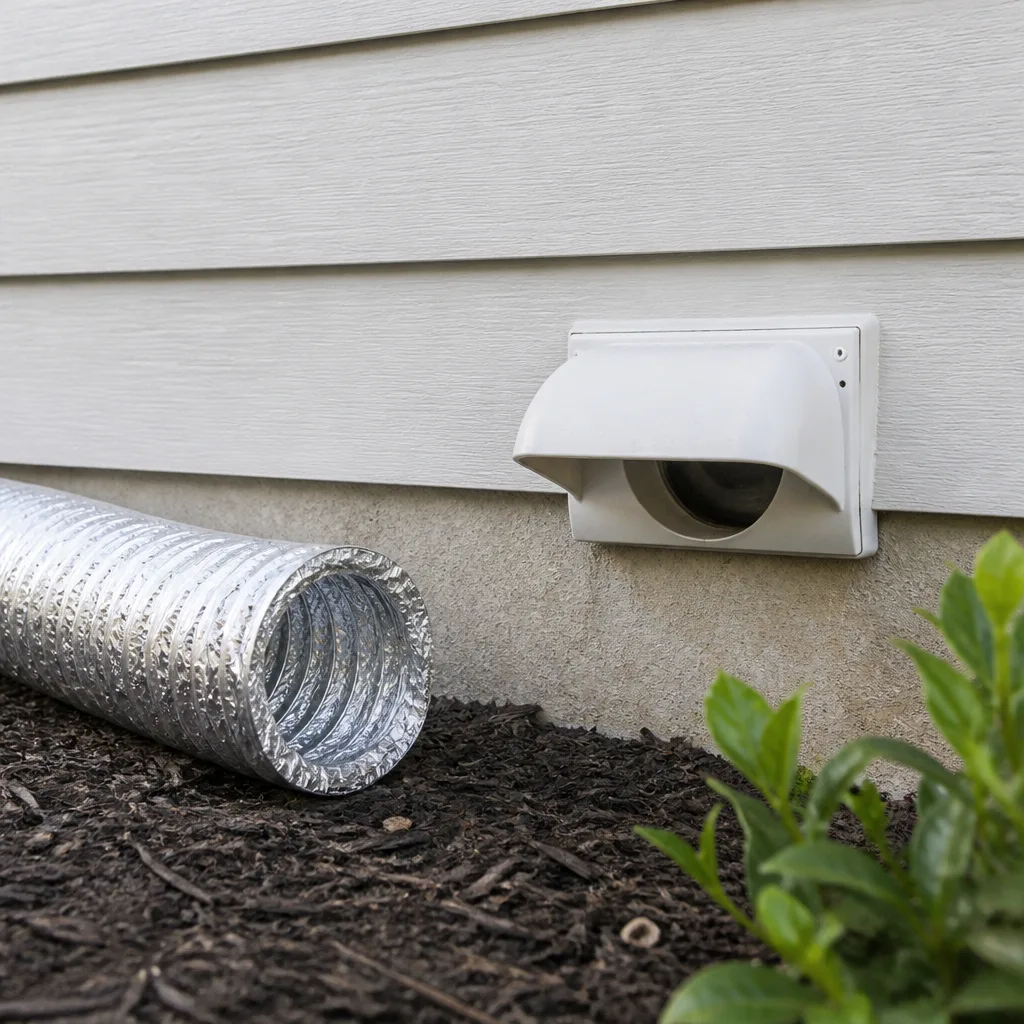 Dryer vent cleaning
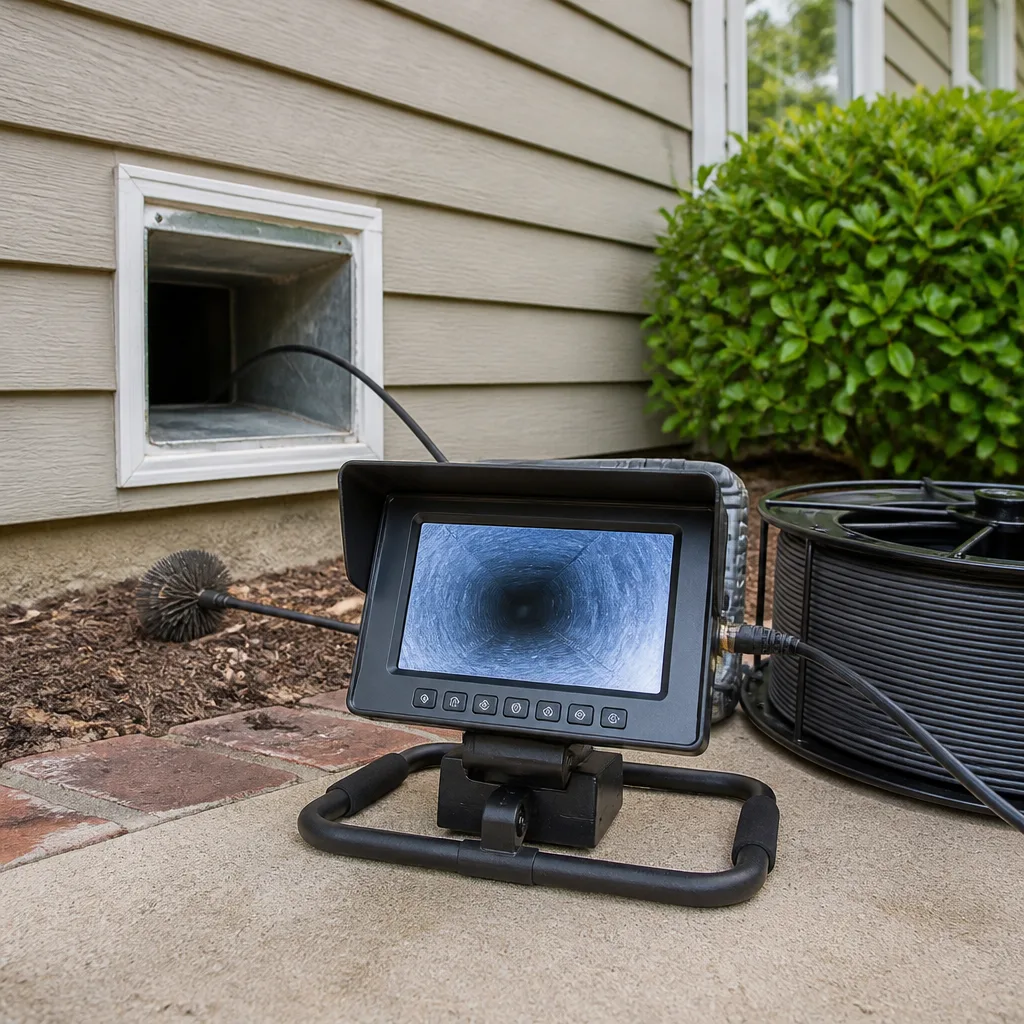 Camera inspection
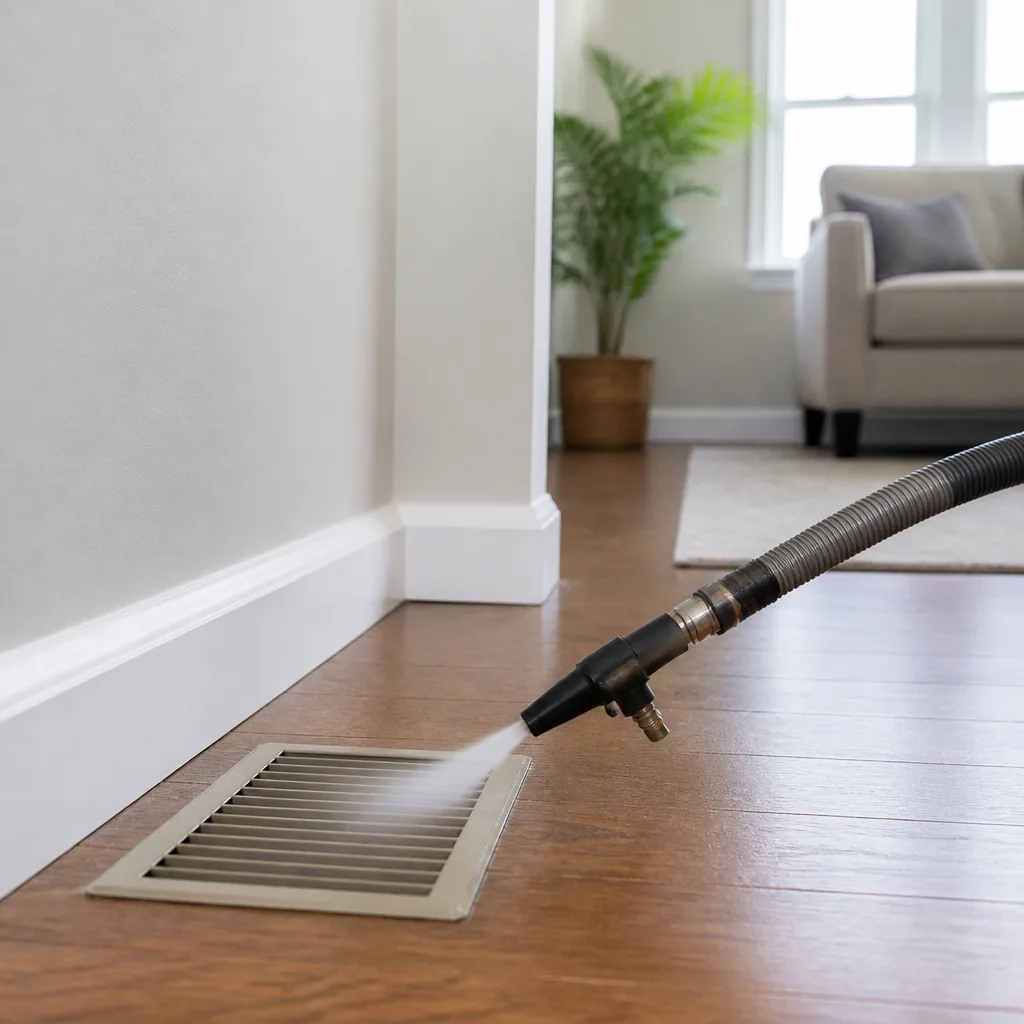 Sanitizing & deodorizing
Whole-system duct and dryer vent check with before-and-after photos - you see exactly what came out of your vents
That "$99 whole-house special" is a bait ad - the real number appears once they are in your hallway, or the "clean" is a shop-vac at the register. We photograph the inside of your ducts before and after instead.
The Complete Air Duct Cleaning Guide for Santa Clara Homeowners
A negative air pressure machine rated below 2,000 CFM can’t clean a typical Santa Clara ranch home’s duct system in a single pass. Most homeowners have no idea what CFM even means when a technician shows up, which is exactly why this guide exists. We’re going to walk you through the mechanical process, tool by tool and step by step, so you can evaluate any contractor’s work in Santa Clara with informed eyes. Knowing what a proper job looks like is the only real consumer protection in this industry.
Quick Answer
Air duct cleaning in Santa Clara involves a negative air machine creating vacuum pressure throughout your ductwork while rotating brushes or pneumatic whips agitate debris loose from the duct walls. A proper residential job takes 3 to 5 hours, uses equipment rated at 2,000 CFM or higher, and includes inspection of every supply and return register, the main trunk lines, the plenum, and the air handler. Santa Clara homeowners should expect to pay $450 to $950 for a whole-system cleaning of an average 1,500 to 2,500 square foot home, with slab-foundation homes sometimes requiring additional access cuts.
Styles & brands we work with
- Whole-home duct cleaning
- Dryer vent cleaning
- Camera inspection
- Sanitizing & deodorizing
Table of Contents
- Why Ducts Get Dirty in Santa Clara Specifically
- The Equipment That Actually Matters: CFM, Agitation, and Access
- What a Pre-Cleaning Inspection Should Document
- The Cleaning Process, Step by Step
- What the NADCA Standard Actually Requires vs. What Companies Claim
- How Often Does Duct Cleaning Really Need to Be Done in Santa Clara?
- Santa Clara Duct Types: Slab Foundations, Buried Flex, and 1960s Sheet Metal
- When Cleaning Isn’t Enough: The Repair Conversation
Why Ducts Get Dirty in Santa Clara Specifically
Santa Clara’s ductwork accumulates debris differently than most of the country, and understanding why will help you make smarter maintenance decisions. We’re not working with the same conditions as a homeowner in Ohio or Texas. The factors are specific, measurable, and predictable.
Wildfire smoke is the first one. Since 2017, Santa Clara County has experienced multiple extended smoke events during fire season, with particulate levels spiking for days or weeks at a time. That smoke doesn’t just stay outside. Your HVAC system pulls outdoor air through the return ducting whenever it runs, especially if you have a fresh air intake. The fine particulates in wildfire smoke, which include carbon compounds and ash residue, deposit on duct walls and settle into the insulation lining of older systems. We’ve pulled dark, fine soot from ducts in homes that were never near an actual fire but sat in the smoke plume for ten days.
The construction boom is the second factor. Santa Clara’s continued tech-corridor development means dust from active job sites, road work, and demolition gets airborne and finds its way into return air systems. Homes near the Lawrence Station area, the El Camino corridor, and any of the ongoing multifamily developments deal with higher ambient dust loads than neighborhoods on the city’s quieter edges. If your home is within a half mile of active construction, your ducts are collecting more than you think.
Third is the age of the housing stock. A significant portion of Santa Clara’s single-family homes date to the 1950s through 1970s. That means original duct systems, often unlined or with deteriorating fiberglass insulation, that shed particles into the airstream. Homes in neighborhoods like the Old Quad, Washington Park, and the areas south of Stevens Creek Boulevard frequently show insulation breakdown when we inspect original sheet metal. The ducts themselves become a source of airborne debris, not just a collector.
Finally, rental turnover contributes. Santa Clara’s rental market moves fast, and each new tenant brings different habits: pets, cooking styles, cleaning product choices, and occupancy patterns. Landlords and property managers preparing units between tenants account for a meaningful portion of the duct cleaning work in this city, which is why Air Duct Cleaning in Santa Clara is something we handle regularly for both homeowners and management companies.
The practical takeaway: if you live in Santa Clara and your ducts haven’t been inspected in three or more years, you likely have a combination of construction dust, smoke residue, and possibly insulation degradation. None of this is cause for alarm by itself, but all of it responds well to a properly executed cleaning.
The Equipment That Actually Matters: CFM, Agitation, and Access
Here’s where most consumer education fails. Articles talk about “professional-grade equipment” without ever defining what that means in mechanical terms. Let’s fix that. You should know three things: what CFM actually does, what type of agitation tool gets used, and where the access point gets placed.
Cubic feet per minute (CFM) measures how much air a negative air machine moves. Think of it as the horsepower of the vacuum system. A shop-vac is rated somewhere around 100 to 200 CFM. A portable “duct cleaning” rig you can rent from a hardware store might hit 800 to 1,200 CFM. A proper residential duct cleaning truck-mounted or high-output portable unit runs between 2,000 and 4,000 CFM. The reason this matters is straightforward: the entire duct system must be placed under negative pressure to keep dislodged debris from escaping into your living space. Low CFM means low negative pressure. Low negative pressure means debris that gets knocked loose during agitation simply resettles deeper in the ducts instead of getting pulled to the collection point. You pay for a cleaning and the dirt stays behind.
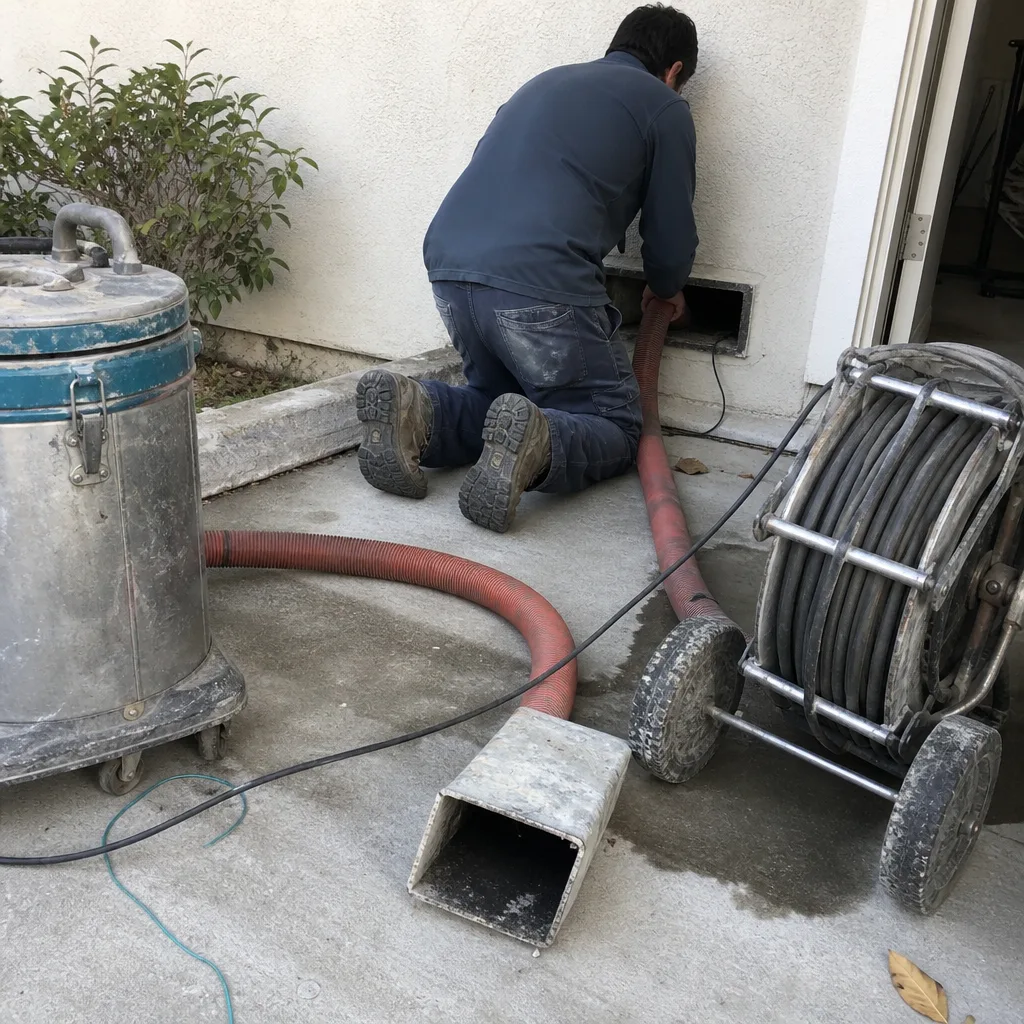
We run Rotobrush and Nikro systems on our jobs. These are the same platforms used by restoration and remediation crews after fires and floods. They’re built for continuous use in residential applications and deliver the airflow needed to hold a Santa Clara home’s duct system under negative pressure throughout the entire cleaning. They are not portable shop-vacs. The distinction matters, because the equipment is what determines whether agitation actually removes debris or just moves it around.
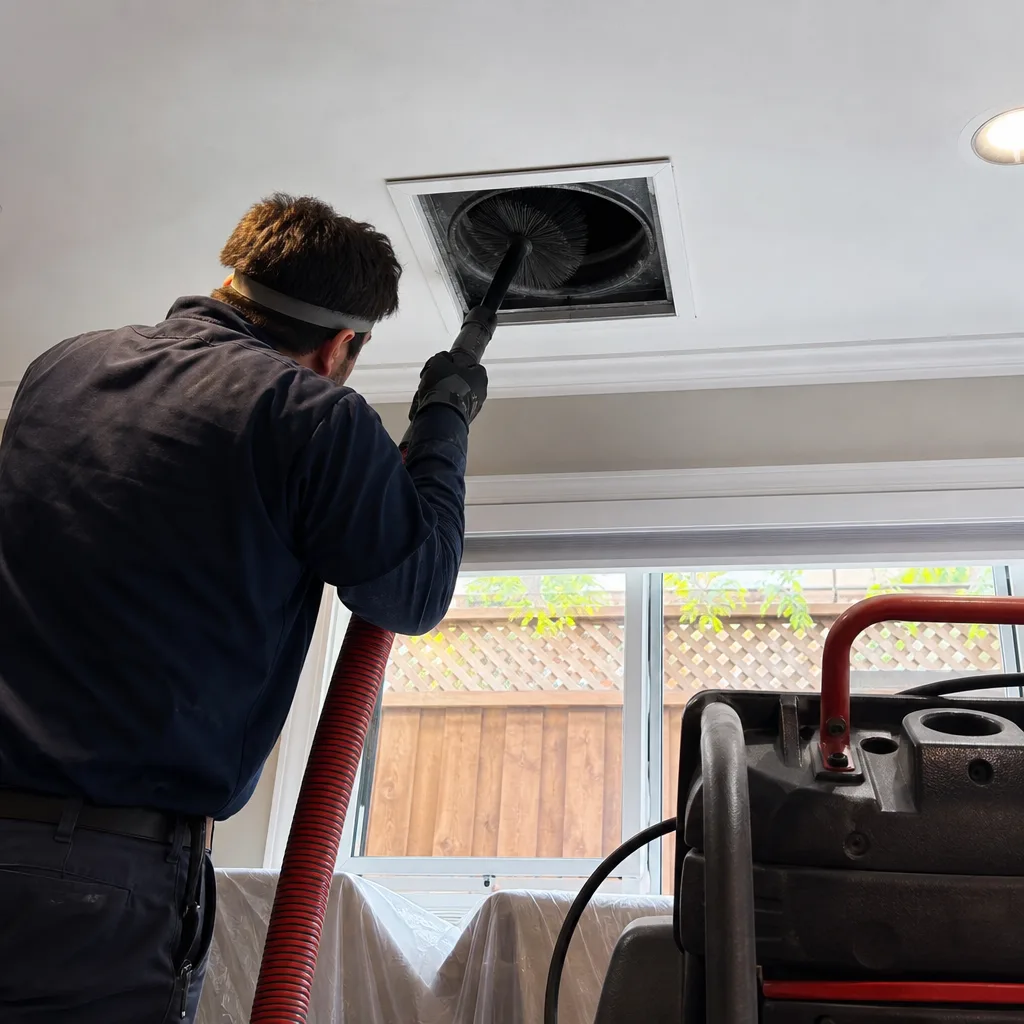
Agitation tools come in two main categories: rotating brushes and pneumatic whips. Rotobrush systems use a spinning brush head that mechanically scrubs the duct walls as it travels through. This works well on round metal ducting and moderately sized flex runs. Nikro systems can run pneumatic whip attachments, which use compressed air to flail soft polymer lines against the duct interior at high speed. Whips are effective on flex ducting where a rigid brush might tear the inner liner. A skilled technician selects the tool based on the duct material and condition. That selection process is something you should ask about during an estimate.
Access point placement is the third variable most homeowners never consider. The negative air machine connects to the duct system at a specific point, and the technician creates additional access holes as needed to insert agitation tools into each branch line. Where those access points go determines how thoroughly the system gets cleaned. A lazy contractor cuts one access hole near the furnace, hooks up the vacuum, and calls it done. That misses most of the branch runs. A thorough contractor cuts access points at the end of each trunk line and at strategic points along main branches. After cleaning, those access points get sealed with metal patches and rated tape. We’ll cover proper access more in the process section below.
One more tool worth knowing: Abatement Technologies equipment is what we keep in our toolkit for heavier jobs. This is gear built for contamination and remediation-level work, the kind of equipment that handles post-renovation dust loads or severe smoke intrusion. Not every home needs that level of capability. But knowing whether a contractor even has access to it tells you something about their range.
What a Pre-Cleaning Inspection Should Document
If your contractor shows up and doesn’t inspect before they start, that’s a red flag. Proper inspection is not just looking at the vent covers; it’s documenting the condition of the system so both you and the technician know exactly what’s being addressed. Here’s what a legitimate pre-cleaning inspection in Santa Clara should include.
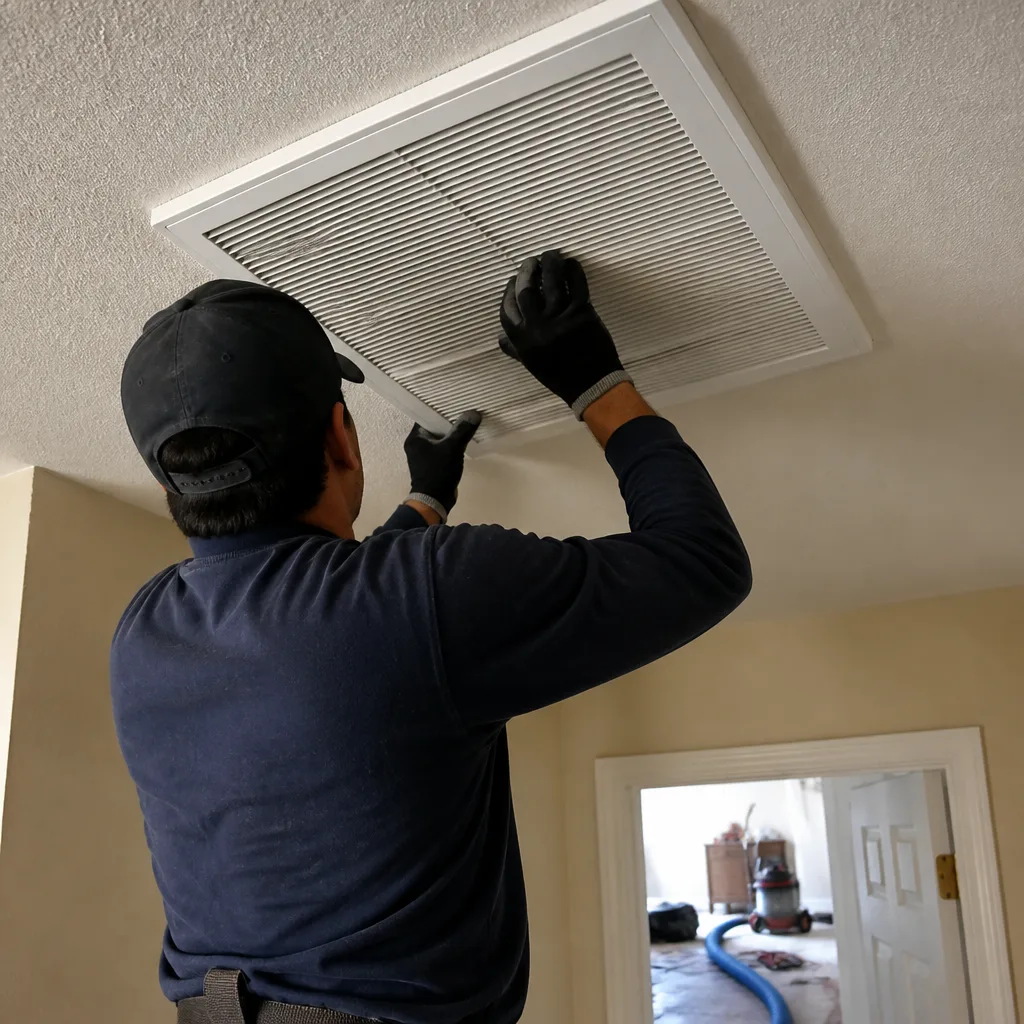
- Register count and location mapping. The technician should count every supply register and return grille, note their locations, and confirm which ones are accessible. Missing a register means missing a section of ductwork.
- Filter condition and placement. Check the HVAC filter: type, MERV rating, condition, and whether it fits correctly. A collapsed or poorly seated filter lets debris bypass directly into the supply side of your system.
- Visual inspection of the air handler and coil. The blower compartment, evaporator coil, and drain pan should get a look. Debris accumulation on the coil affects system efficiency and air quality, and it tells you whether the duct cleaning will actually address the whole air pathway or just the ducts.
- Duct material identification. Are the ducts rigid sheet metal, flex duct, fiberglass duct board, or a mix? Each requires different cleaning techniques and tools. The inspection should note what’s actually in your walls and attic.
- Access point identification. The technician should identify where access cuts will be made, explain why those locations were chosen, and confirm that appropriate patching materials are on hand.
- Condition documentation. Any existing damage, disconnected sections, crushed flex runs, or deteriorated insulation should be photographed and noted before work begins. This protects you from claims that the cleaning crew caused pre-existing damage.
What gets skipped by generalist HVAC crews? A lot. They’ll often clean what’s visible from the furnace and skip branch runs that require additional access cuts. They may not map registers at all. They almost never photograph the plenum interior before and after. That’s why Heritage Duct Cleaning home places inspection first, not last. If we can’t show you the condition of your ducts before we start, how can we prove what the cleaning accomplished?
Ask for a copy of the inspection notes. A contractor who refuses or says “we just do our own thing” is not a contractor you want cutting holes in your Santa Clara home’s duct system.
The Cleaning Process, Step by Step
Understanding the actual sequence of a proper duct cleaning will help you evaluate whether the job you’re paying for is the job that gets done. Here’s the mechanical reality of what a thorough whole-system cleaning looks like in a typical Santa Clara home, using the equipment we’d bring to your job.
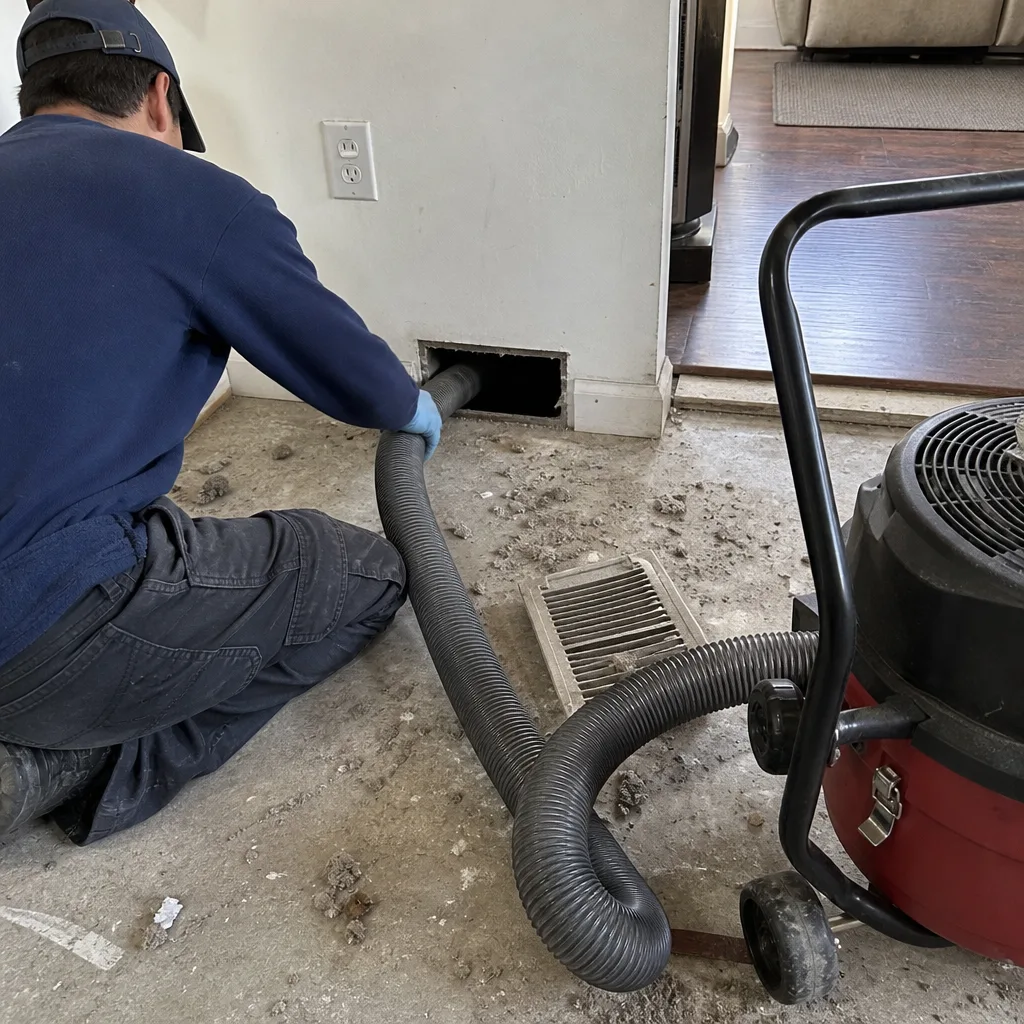
- System pressurization and negative air setup. The furnace or air handler gets turned off at the thermostat and the disconnect. The negative air machine connects to the duct system, typically at the main trunk line near the air handler or at the return plenum. Sections of the system not being actively cleaned get sealed off so the vacuum draws only from the area being worked. This creates the negative pressure that keeps dislodged debris moving toward the collection point instead of blowing into your home.
- Agitation, branch by branch. Starting with the supply side, the technician cuts access points at strategic locations and inserts the agitation tool, whether that’s a Rotobrush spinning brush head for metal ducting or a pneumatic whip for flex runs. Each branch line gets worked from the register end back toward the trunk, pushing dislodged debris toward the negative air stream. This happens branch by branch, never as a single pass through the whole system.
- Trunk line and plenum cleaning. Once branch runs are clear, the main trunk lines and the supply plenum get direct attention. High-volume airflow plus mechanical agitation removes accumulated debris from the largest air pathways. On a properly sized system, you should be able to see the interior of the plenum before and after. We photograph it.
- Return side cleaning. The return side gets the same treatment: branch returns, return trunk, and the return plenum at the air handler. Return ducts carry unfiltered air from your living spaces, so they accumulate lint, hair, carpet fibers, and household dust at a faster rate than supply ducts.
- Air handler and coil inspection. While the ducts are open, the blower compartment and evaporator coil get inspected. If the coil is fouled, that’s a separate service in most cases, but you should at least know whether debris accumulation is affecting your system’s efficiency.
- Filter replacement. Your old filter is dirty from the cleaning process itself. A fresh filter goes in, properly seated, before the system gets turned back on.
- Access point sealing. Every access cut gets patched with galvanized metal and sealed with rated HVAC tape. The patches remain accessible for future service but sealed tight against air loss. A sloppy patch job is visible and should be corrected before you sign off.
- Verification walkthrough. The technician should walk you through what was done, show before and after photos, and confirm register count and locations. You should leave the walkthrough knowing exactly what your money paid for.
The entire process typically takes 3 to 5 hours for a 1,500 to 2,500 square foot home. If a crew is done in 90 minutes, they skipped steps.
What the NADCA Standard Actually Requires vs. What Companies Claim
NADCA is the National Air Duct Cleaners Association, and its ACR Standard (Assessment, Cleaning, and Restoration of HVAC Systems) is the nearest thing this industry has to a professional benchmark. Most Santa Clara homeowners have never heard of it, which is a problem, because many duct cleaning companies claim “NADCA certification” without explaining what that actually means or what the standard actually requires.
The ACR Standard specifies that duct cleaning must include cleaning of all supply and return ductwork, all supply and return registers and grilles, the supply and return plenums, the air handler unit interior, the blower assembly, and the evaporator coil and drain pan when accessible. That’s the whole air pathway. Not just the visible duct runs. Not just what’s easy to reach. The entire system gets cleaned to an objectively verifiable standard: no visible debris remaining on interior surfaces after cleaning.
What companies often claim is that they “follow NADCA standards” while performing a partial cleaning. They clean from the register openings without cutting proper access points, or they clean the trunk lines and call the branch runs done. They may have one technician on staff with a NADCA certification while the actual crew doing the work has none. None of that meets the standard.
You don’t need to become a NADCA expert to protect yourself. You need to ask two questions: “Does your cleaning process cover every supply and return branch, both plenums, and the air handler?” and “Can I see before and after photos of the plenum interior?” If the answer to either is no, the company is not following the ACR Standard regardless of what their website says.
We use the ACR Standard as our baseline because it’s a clear, defensible definition of what a complete job looks like. No mystery. No proprietary process language. Just a verifiable standard we can show you we met. When you know that the standard requires full system cleaning and not just what a technician can see from one access point, you’re harder to shortchange. That’s the point.
How Often Does Duct Cleaning Really Need to Be Done in Santa Clara?
The honest answer is: it depends, but Santa Clara conditions push the frequency shorter than the national norm. The “every 3 to 5 years” recommendation you see everywhere is a generic starting point that doesn’t account for wildfire smoke seasons or construction dust.
Here’s a practical schedule for Santa Clara homeowners:
- Every 2 to 3 years: Homes within a half mile of active construction sites, homes with occupants who have respiratory conditions or severe allergies, and homes that sat in direct wildfire smoke plumes for multiple days.
- Every 3 to 5 years: Standard single-family homes without pets or heavy construction exposure, with clean filter maintenance and no major renovation history.
- Every 3 years: Homes with multiple pets, especially long-haired dogs or cats, regardless of construction proximity.
- At purchase or after major renovation: New home purchase (especially vintage Santa Clara stock), post-remodel drywall work, post-roof replacement, or after any project that generated settled dust.
The wildfire smoke factor is worth paying attention to. If your home experienced any of the significant smoke events we’ve seen in Santa Clara County since 2017, and you haven’t had your ducts cleaned since, there’s a measurable accumulation of smoke residue in your system. The smoke particles are small enough to penetrate deep into ductwork and settle on interior surfaces. They don’t just blow through. They sit there until removed.
If you’re not sure whether your ducts are due, here’s a simple check: shine a flashlight onto the inside of a supply register. If you can see visible dust accumulation on the duct walls, or if you can wipe a finger along the interior and come away with a gray film, the system is carrying debris. That’s not a scientific test, but it’s a decent canary. If you want a definitive answer, Air Duct Cleaning in Santa Clara starts with an inspection rather than a sales pitch.
Santa Clara Duct Types: Slab Foundations, Buried Flex, and 1960s Sheet Metal
Santa Clara’s housing stock presents specific duct configurations that affect how cleaning should be done. A contractor who treats every home the same is either inexperienced or cutting corners. Here’s what we regularly encounter in this city and why the differences matter.
Slab foundation homes, common in the tract developments of the 1950s and 1960s, often have duct runs buried in or under the concrete slab. In some cases, these are metal ducts encased in concrete; in others, they’re flex or metal runs routed through sleeves beneath the slab. Cleaning buried ductwork requires different access strategies because you can’t simply cut into the run wherever you want. The technician has to work from the available access points, typically the registers and branch takeoffs from the main trunk, and use pull tools to reach what can’t be directly accessed. This takes more time and more skill. It also means the technician should be honest with you about what level of access is achievable without opening the slab, which nobody wants.
Older tract homes with original sheet metal from the 1960s and 1970s present the opposite challenge. The metal itself is often fine; it’s the interior lining that degrades. Fiberglass insulation glued to the duct interior breaks down over decades, releasing fibers into the air stream and creating a rough surface that catches and holds debris. Cleaning these systems requires care not to further damage degraded liners. A rigid brush can make things worse faster than it makes things better. The inspection step exists specifically to identify this condition before tooling goes in.
Flex duct runs, common in homes built from the 1980s onward and in countless Santa Clara remodels, are the most easily damaged by improper cleaning. Flex duct has a thin plastic inner liner over a wire coil and insulation jacket. A rotating brush with the wrong stiffness, or a technician who works too aggressively, can tear the liner or kink the run. That creates a pathway for dust, insulation particles, and conditioned air to escape into unconditioned space. Pneumatic whips are generally the right tool for flex duct because they clean without the mechanical force of a rigid brush.
This is also where the repair conversation often starts. Crushed flex, disconnected joints, and deteriorated liners are common findings in Santa Clara homes, especially those that have had multiple renovations or pest activity in the attic. Cleaning can’t fix structural problems. That’s why Air Duct Repair in Santa Clara is part of what we do; not every company offers repair capability, which means homeowners sometimes pay for a cleaning that can’t address the actual condition of their system. From diagnosis to repair in a single visit beats scheduling two vendors.
When Cleaning Isn’t Enough: The Repair Conversation
You can clean a duct system that has structural problems and still have dirty air. That’s an uncomfortable fact worth stating plainly. Disconnected joints, crushed flex runs, gaps at the plenum connection, and deteriorated insulation are not cleaning problems. They’re repair problems. And they’re common enough in Santa Clara’s older housing stock that you should know what to look for.
A disconnected duct joint means the air you’re paying to condition is blowing into your attic or wall cavity instead of your rooms. That’s money heating empty space. A crushed flex run restricts airflow to a room, creating pressure imbalances that pull unfiltered air from other sources. A gap at the plenum connection lets attic air, which includes insulation fibers, pest debris, and whatever else is up there, get pulled into your air stream. Cleaning won’t fix any of these. The debris will return as quickly as it was removed because the entry point is still open.
This is why we built repair capability into what we do. When we encounter structural problems during an inspection, we can address them rather than cleaning around them and sending you a bill that doesn’t solve your problem. Not every company can. The generalist HVAC contractor who sends a junior tech with a portable vacuum isn’t carrying sheet metal tools, mastic sealant, and replacement flex. We’re not just cleaning; we inspect and repair as required.
If you live in a Santa Clara home built before 1980 and you’ve never had the duct system inspected for structural issues, there’s a reasonable chance you have at least one disconnected joint or degraded connection somewhere. The older the system, the more time it’s had to loosen. The good news: these problems are usually straightforward to fix when they’re found. The bad news: they’re easy to miss when a cleaning crew isn’t looking for them.
Common Mistakes to Avoid
- Hiring on price alone. Santa Clara has plenty of discount duct cleaning ads. A $99 whole-house special means the crew is either not cleaning the whole system or not spending enough time in your home to matter. The economics don’t work any other way.
- Not asking about equipment CFM. If the technician can’t tell you what their negative air machine is rated at, it’s probably because they don’t want you to know. Below 2,000 CFM, you’re paying for partial cleaning.
- Accepting a cleaning without before and after photos. You wouldn’t accept a paint job without seeing the final color. Ducts are invisible by nature, which makes photographic documentation the only proof you have that the work was actually done.
- Skipping the repair conversation. If the inspection finds disconnected joints or crushed flex and your technician says “we’ll just clean around it,” you’re paying for a service that can’t deliver what it promises.
- Believing ducts never need cleaning. Some HVAC companies tell homeowners duct cleaning is unnecessary. That’s true for a properly maintained system in a low-dust environment. It’s not true for a 1960s Santa Clara home with original sheet metal, construction dust, and two Golden Retriever-sized pets.
- Not checking what the standard actually covers. “NADCA certified” means something specific. Asking what the ACR Standard includes is a fair test of whether a company’s certification is real or marketing.
- Using the wrong filter after cleaning. The highest MERV filter you can find isn’t always right for your system. High-efficiency filters restrict airflow, which can strain older Santa Clara furnaces and air handlers. Ask about appropriate filtration for your specific setup.
See the difference
 Before
 After
 Before
 After
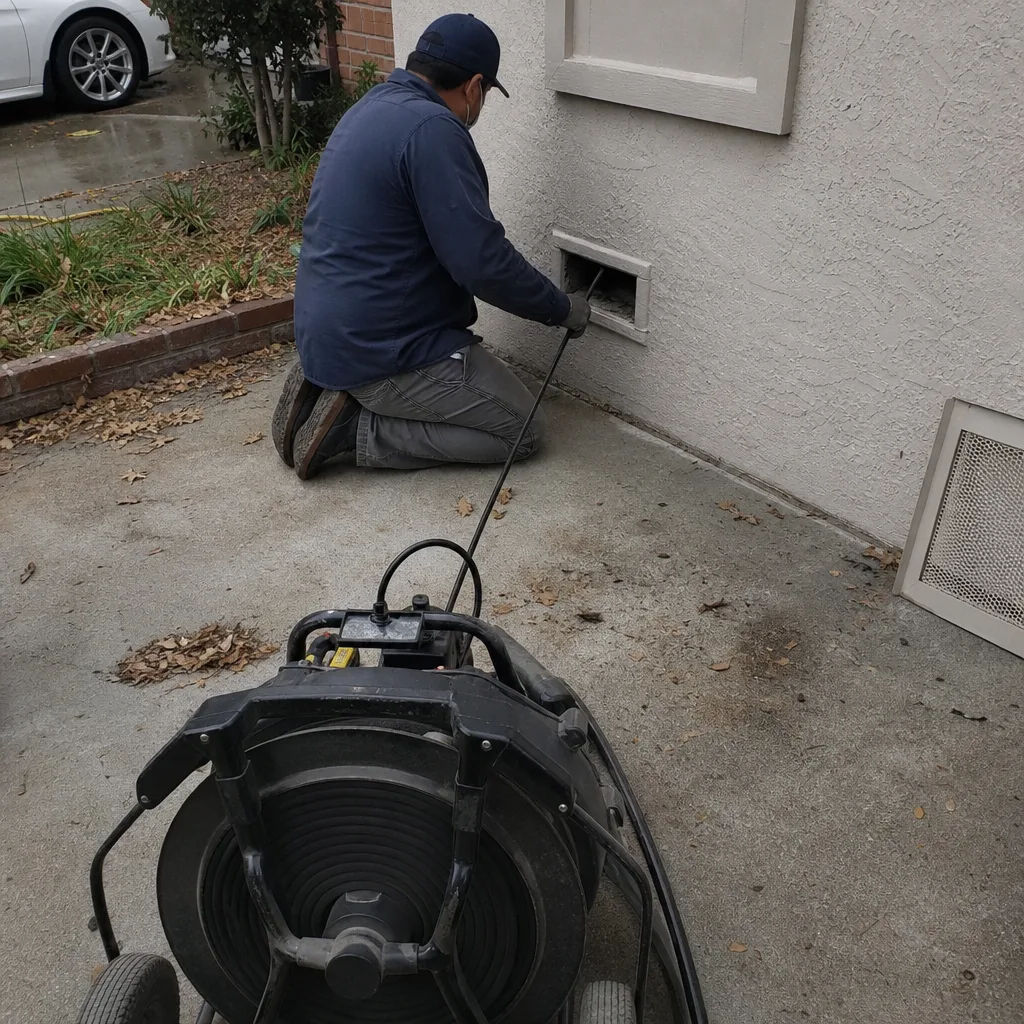 Before
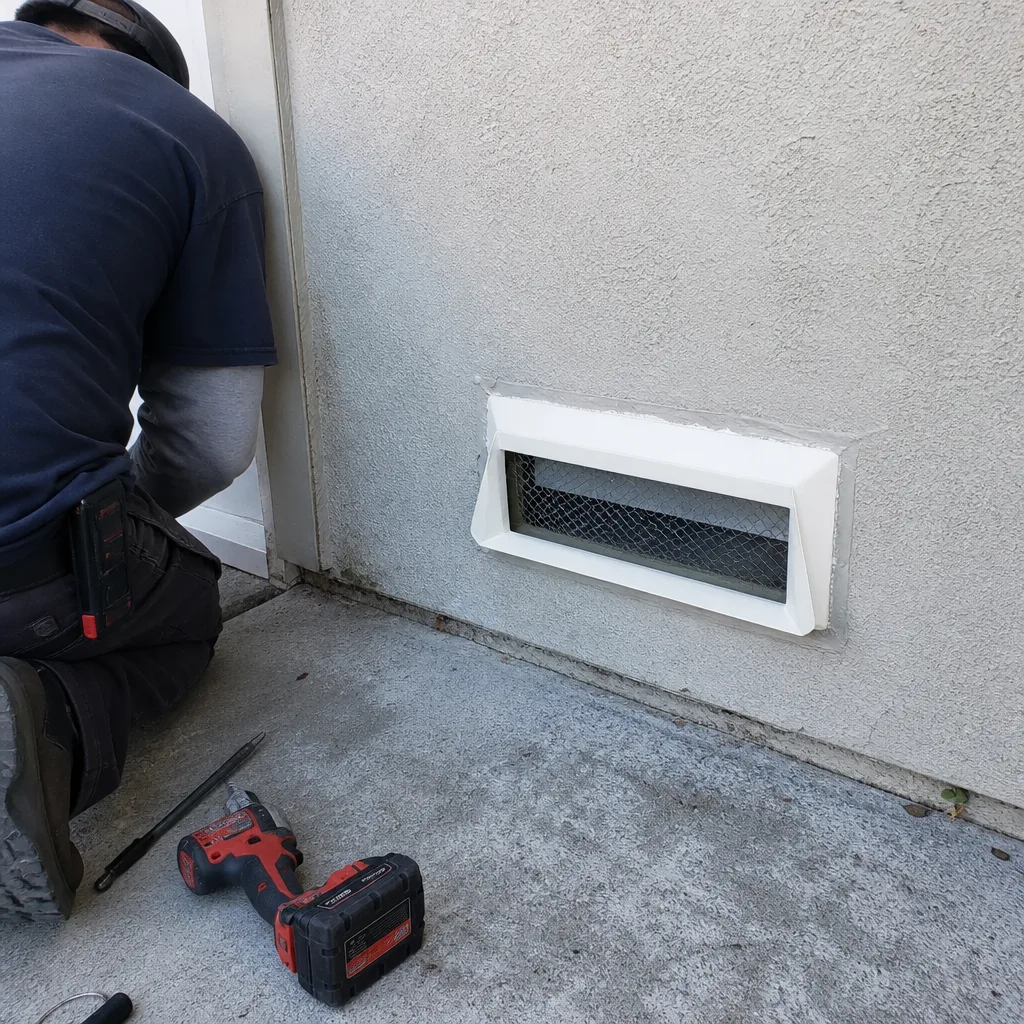 After
When to Call a Professional
You should call a professional when you can see visible dust accumulation at your registers, when you’ve experienced a wildfire smoke event and haven’t had the system inspected since, when you’ve completed a renovation that generated drywall dust, when you’re moving into a home with unknown duct history, when you or a family member has unexplained respiratory irritation that improves away from home, or when your HVAC system has been running in a home with multiple pets for years without service. Any of these conditions warrants at least an inspection. Heritage Duct Cleaning offers free estimates in Santa Clara; call (855) 550-3778 if you’re unsure whether your system needs work. The inspection itself will tell you what you need to know.
Frequently Asked Questions
Air duct cleaning in Santa Clara typically costs between $450 and $950 for a whole-system cleaning of a home between 1,500 and 2,500 square feet. The final price depends on system size, number of registers, duct material and condition, and access complexity. Slab foundation homes and systems with buried ductwork may cost more due to the additional labor involved in accessing those runs. Call (855) 550-3778 for a specific quote on your home; estimates are free.
Cheaper quotes usually mean lower-powered equipment, fewer access points, shorter cleaning time, or all three. A portable vacuum system under 2,000 CFM can’t maintain the negative pressure needed to actually extract dislodged debris from your entire duct system. The debris gets knocked loose and resettles deeper in the ducts. You pay less, but you don’t get a cleaning that meets the NADCA ACR Standard. The honest answer is that a proper job costs what it costs because of the equipment and time involved.
Ask for before and after photos of the plenum interior, the trunk lines, and the branch runs. A legitimate company will photograph the interior surfaces during inspection and again after cleaning. The difference should be visible. Also do the register check yourself: wipe a white cloth along the inside of a supply register before the job, and do the same after. If the cloth comes back gray after the cleaning, the job wasn’t thorough. Heritage Duct Cleaning documents every job with interior photos so you can see exactly what was cleaned.
Duct cleaning removes accumulated dust, pollen, pet dander, and other particulates from your air distribution system, which can reduce the volume of those airborne particles recirculating through your home. It’s not a cure for allergies, and it won’t remove allergens from your carpets, furniture, or bedding. But for Santa Clara homeowners with properly cleaned ducts and a clean home, the reduction in recirculated particulate load is a meaningful improvement.
Air duct cleaning addresses the HVAC distribution system: supply and return ducts, plenums, registers, and the air handler. Dryer vent cleaning addresses the dedicated exhaust duct that carries hot, moist air from your clothes dryer to the exterior. They’re separate systems with separate problems. Dryer vents accumulate lint and are a fire hazard when clogged; your dryer vent is a fire risk waiting to be addressed if it hasn’t been cleaned in over a year. Heritage Duct Cleaning handles both, but they’re always performed as separate services. Learn more about Dryer Vent Cleaning in Santa Clara.
In most cases, yes. Access points for cleaning are typically made in the ductwork itself, not in your drywall. The technician cuts small openings directly into the duct runs at strategic locations, usually in attic space, crawl space, or at visible points along the trunk line. After cleaning, these openings are patched with metal and sealed with rated tape. In rare cases where ductwork is completely inaccessible, more invasive access may be required, but a competent inspection will identify these situations before work begins.
We service homes using a range of air quality equipment, with specific training on Honeywell and Aprilaire systems. These are two of the most widely installed residential air quality platforms in Santa Clara, and understanding how they integrate with the duct system means we can assess the full air pathway rather than just the ducts in isolation. We also use Guardsman-grade products throughout our service process, ensuring that the materials we bring into your home meet professional product standards.
The Bottom Line
Air duct cleaning is a mechanical process, not a mystery service. Once you understand CFM ratings, agitation tools, access point strategy, and the NADCA ACR Standard, you can tell the difference between a real cleaning and a discount job before you ever write a check. Santa Clara’s combination of wildfire smoke, construction dust, and aging housing stock means your ducts are working harder than the national average and accumulating debris faster. The right response is a properly executed whole-system cleaning, documented with before and after photos, performed by a company that can also repair what’s broken rather than clean around it. When it’s time to act, call (855) 550-3778 for a free estimate and an inspection that will show you exactly what’s in your ducts.
Written by the team at Heritage Duct Cleaning, serving Santa Clara since 2015.