
Last updated November 2, 2026
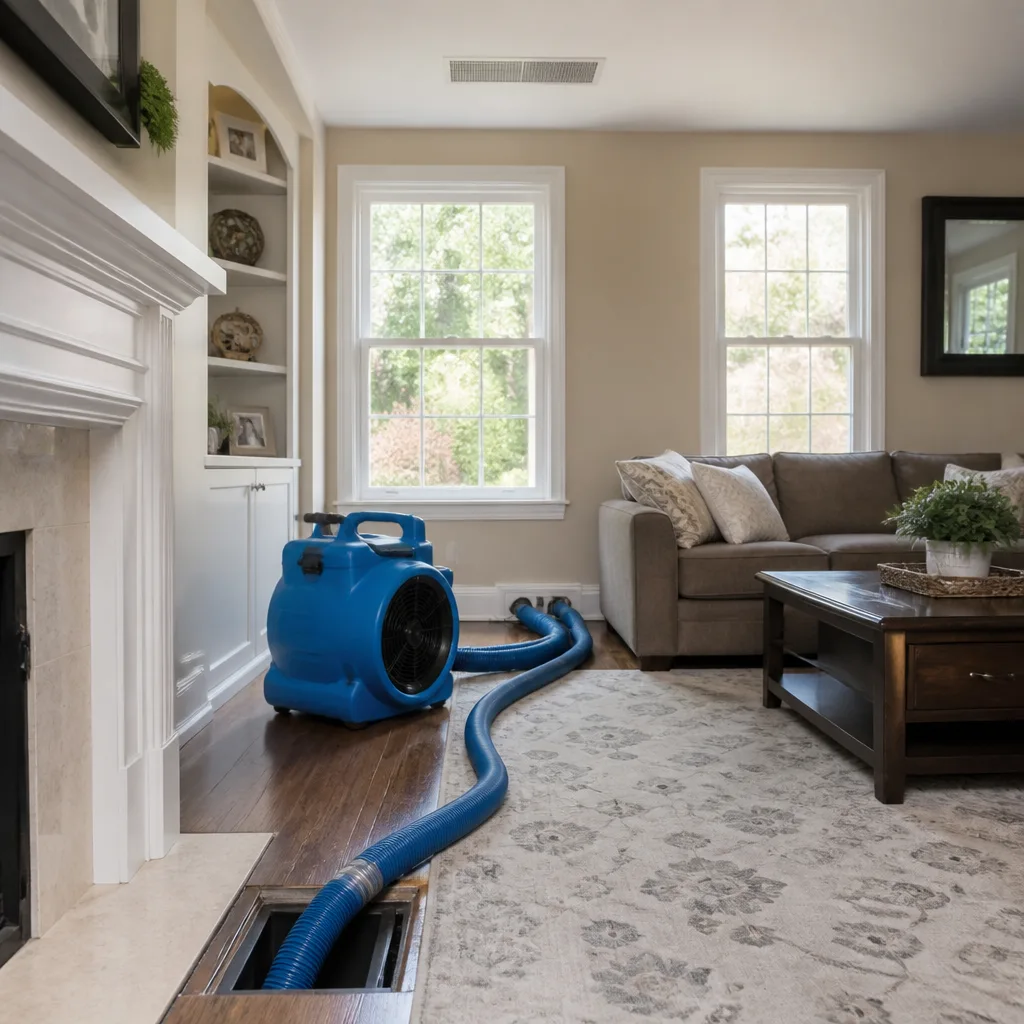 Whole-home duct cleaning
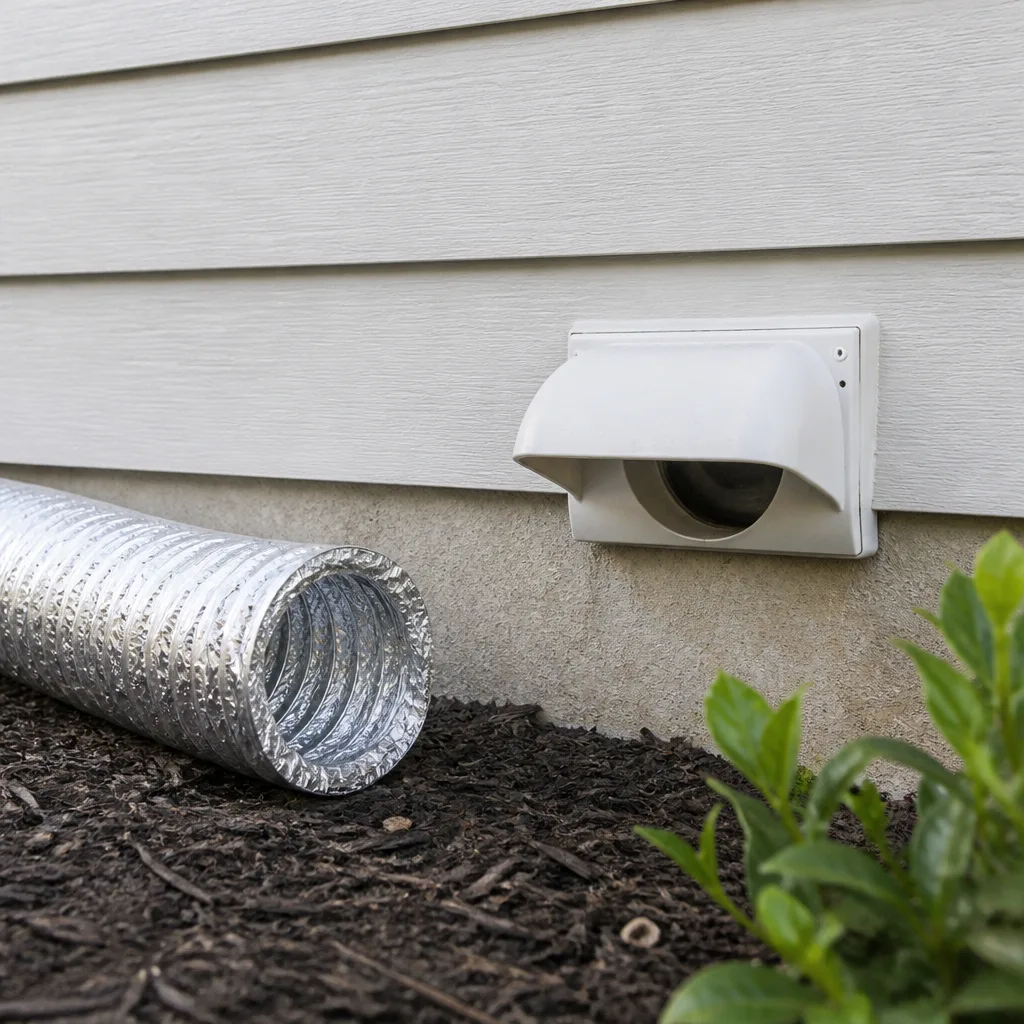 Dryer vent cleaning
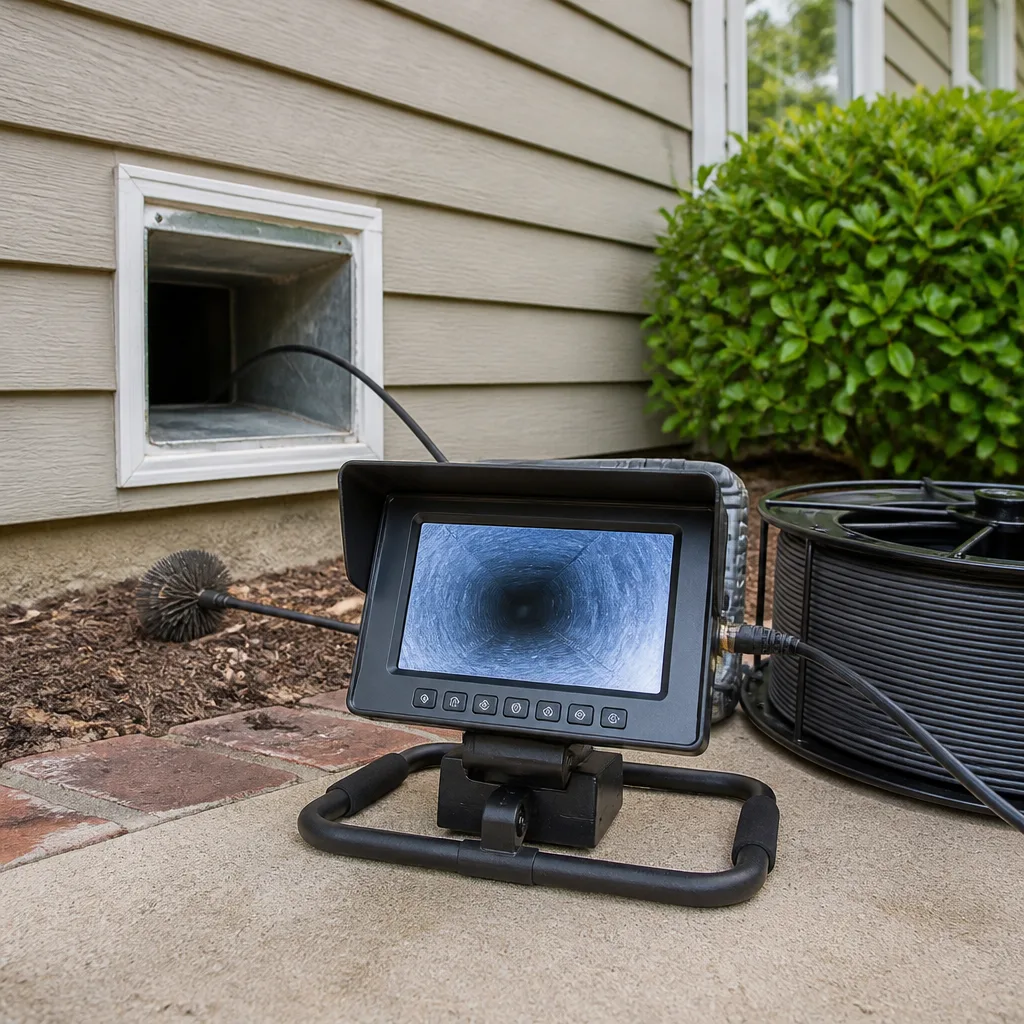 Camera inspection
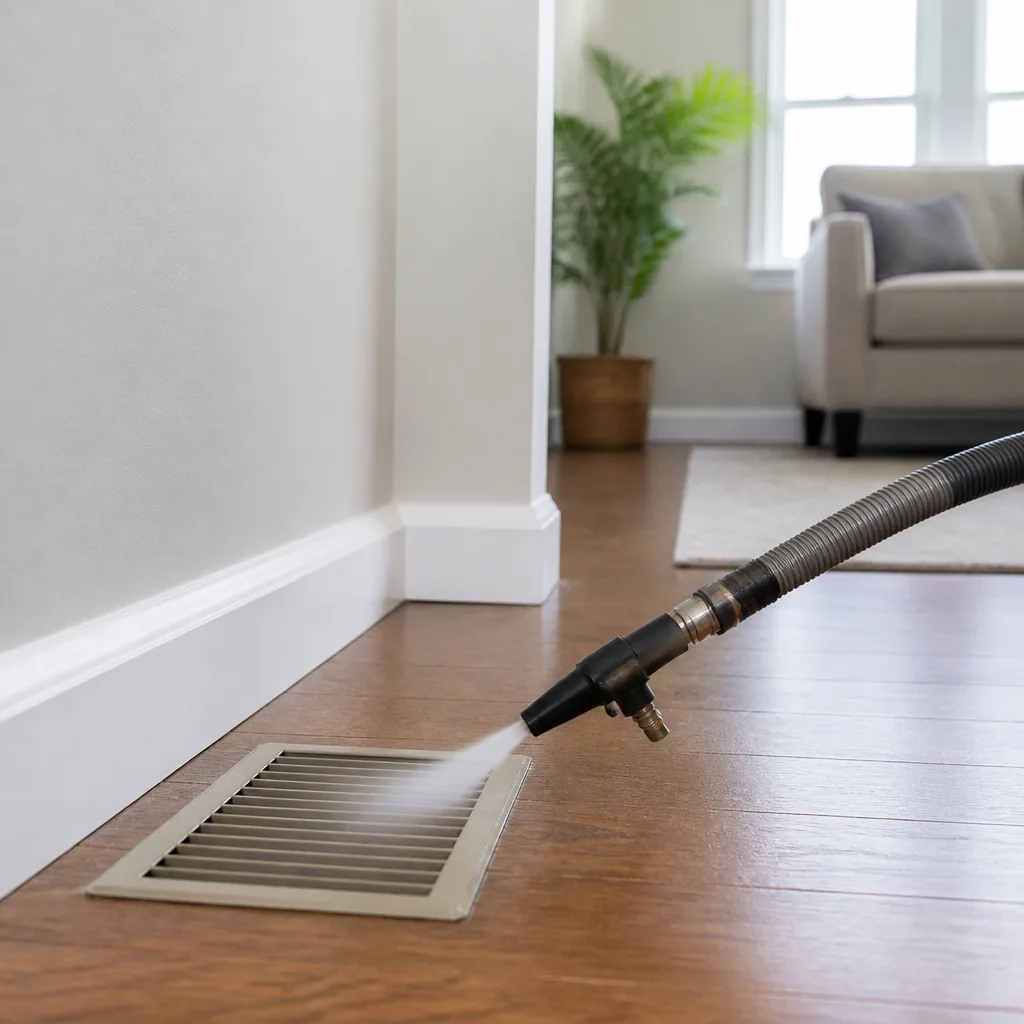 Sanitizing & deodorizing
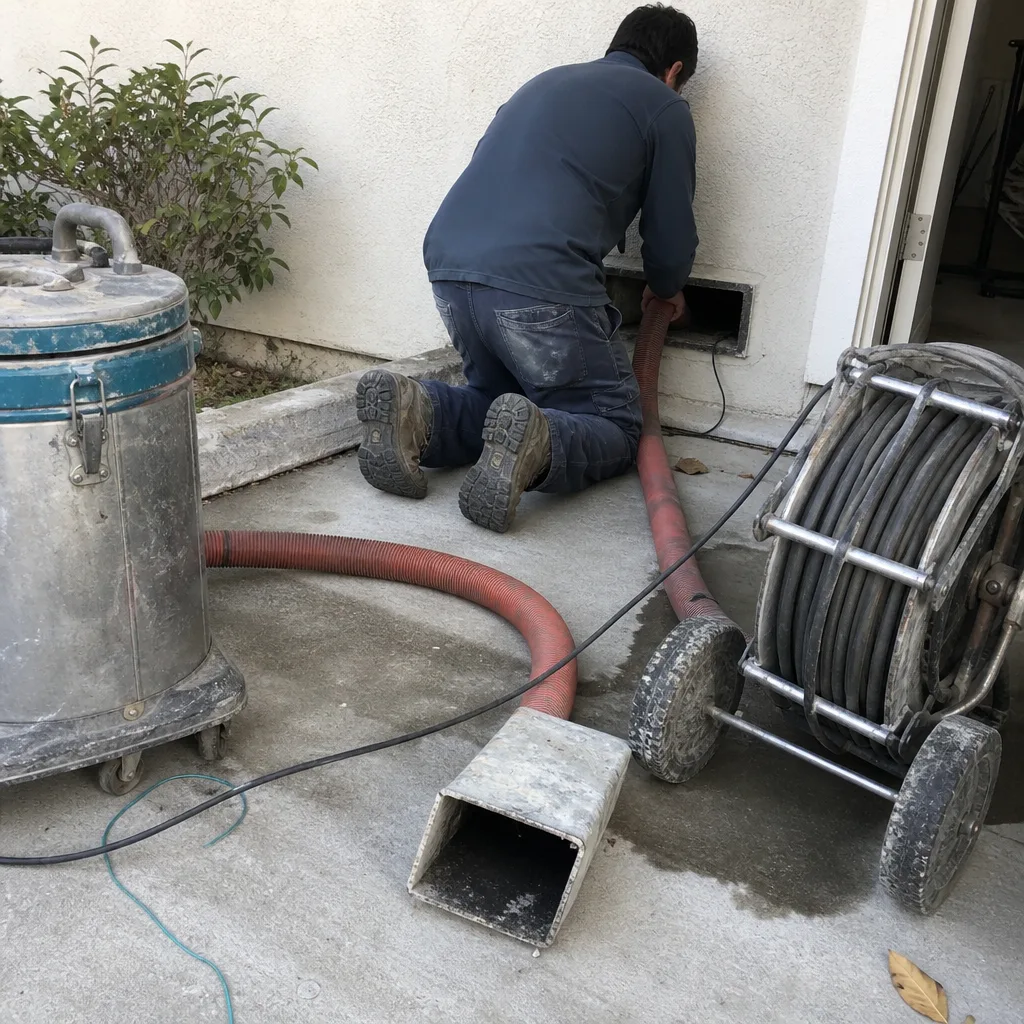
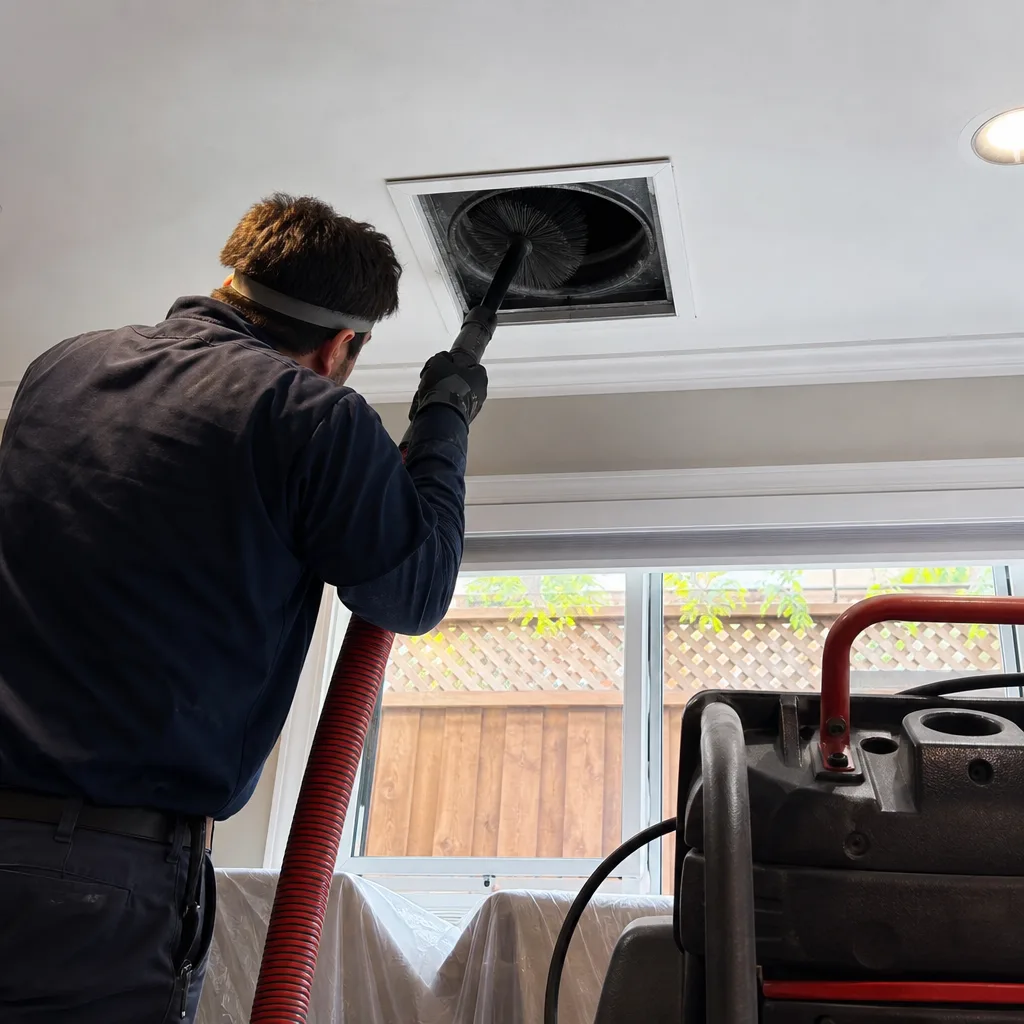
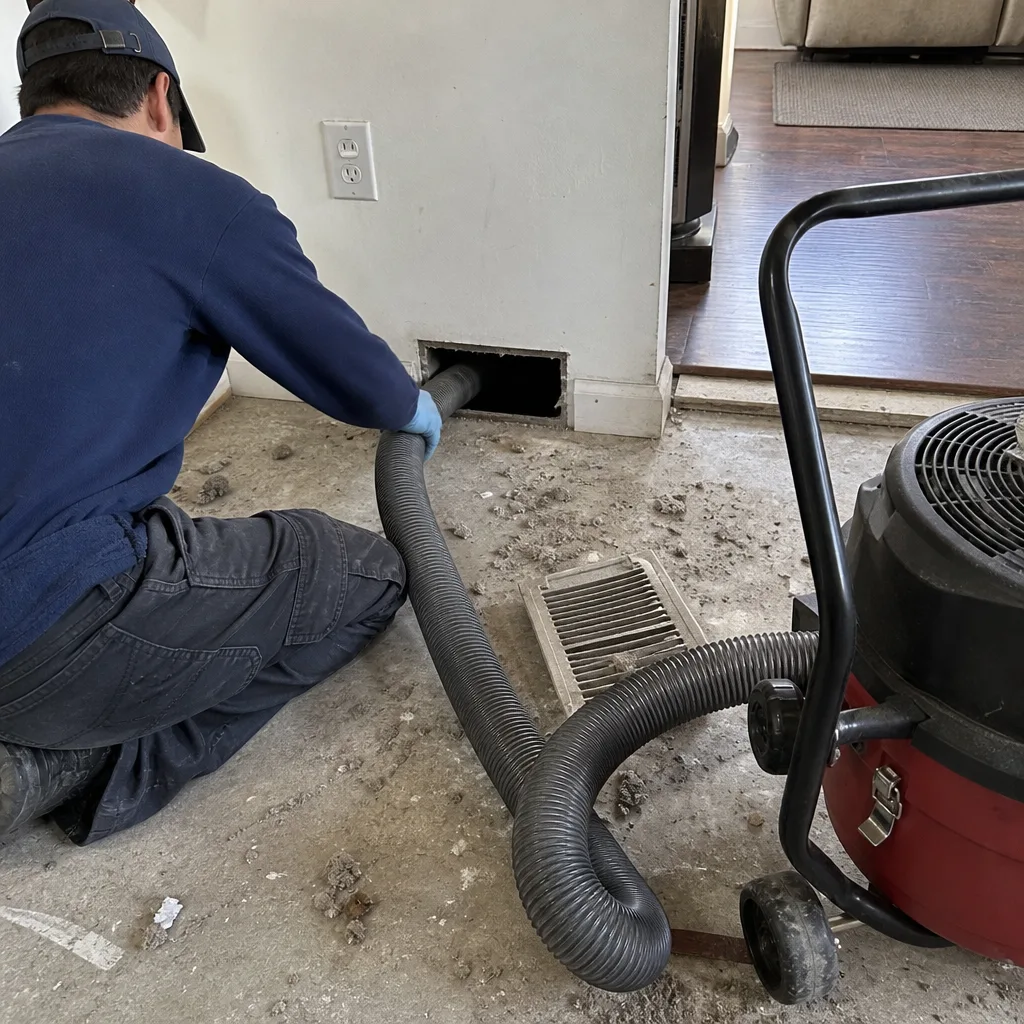
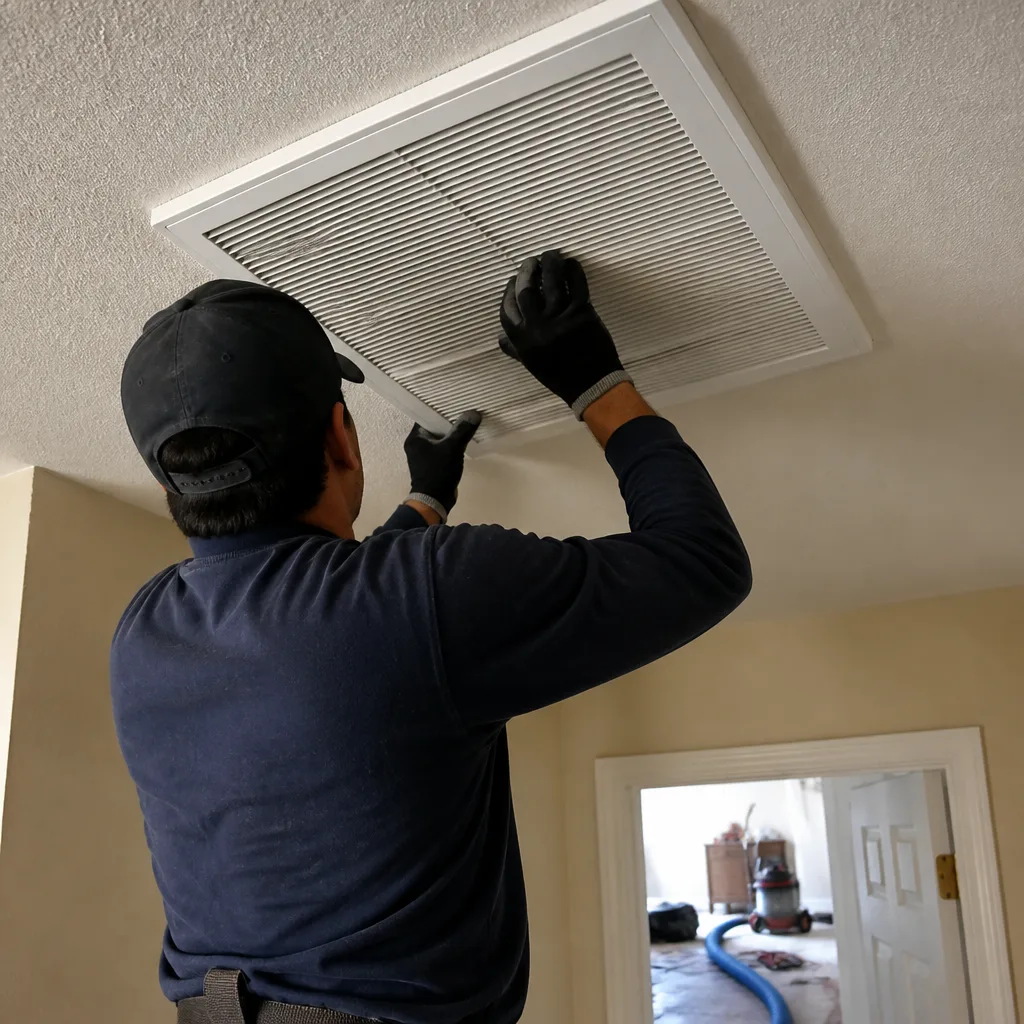
Whole-system duct and dryer vent check with before-and-after photos - you see exactly what came out of your vents
That "$99 whole-house special" is a bait ad - the real number appears once they are in your hallway, or the "clean" is a shop-vac at the register. We photograph the inside of your ducts before and after instead.
DIY vs Professional Air Duct Cleaning: The Santa Clara Homeowner’s Decision Guide
Here’s a number that surprises most Santa Clara homeowners: the average residential duct system holds between 8 and 12 pounds of dust, skin cells, pet dander, and construction debris, even in homes that are cleaned weekly. That material is spread across 150 to 400 square feet of interior duct surface area, most of which you cannot see and cannot reach with anything sold at a hardware store. This guide is going to draw a precise line between what a careful Santa Clara homeowner can legitimately do themselves and where the physics of air movement makes our Air Duct Cleaning services the only option that actually works. We’ll cover real costs, real tools, and the specific mistakes we see homeowners make in Santa Clara that end up costing more than if they’d called a professional from the start.
Styles & brands we work with
- Whole-home duct cleaning
- Dryer vent cleaning
- Camera inspection
- Sanitizing & deodorizing
Quick Answer
DIY air duct cleaning is realistic for register covers, visible duct openings, and short, straight dryer vent runs, but it cannot clean the main trunk lines or branch ducts that hold most of the dust in a Santa Clara home. A shop vac does not move enough air to pull debris out of a duct system, and the attempt often pushes debris deeper into the system or dislodges connections. For any duct cleaning beyond the first few feet of a register, professional negative-pressure equipment is the only method that removes debris rather than redistributing it.
Table of Contents
- What DIY Can Legitimately Accomplish
- The Shop Vac Problem: Why CFM and Static Pressure Matter
- When DIY Makes the Problem Worse
- Santa Clara Cost Comparison: DIY vs Professional
- The Middle Path: What to Do Before the Pros Arrive
- Equipment Tiers: What Actually Separates Professional Tools
- Common Mistakes to Avoid
- When to Call a Professional
- Frequently Asked Questions
- The Bottom Line
What DIY Can Legitimately Accomplish
We want to be straight with you from the start: there are parts of duct maintenance a Santa Clara homeowner can absolutely handle, and doing them well extends the time between professional cleanings. The key is knowing which tasks are genuinely within reach and which ones just feel like they should be, as we explore in our How to Hire an Air Duct Cleaning Contractor in Santa Clara: A Step-by-Step Guide.
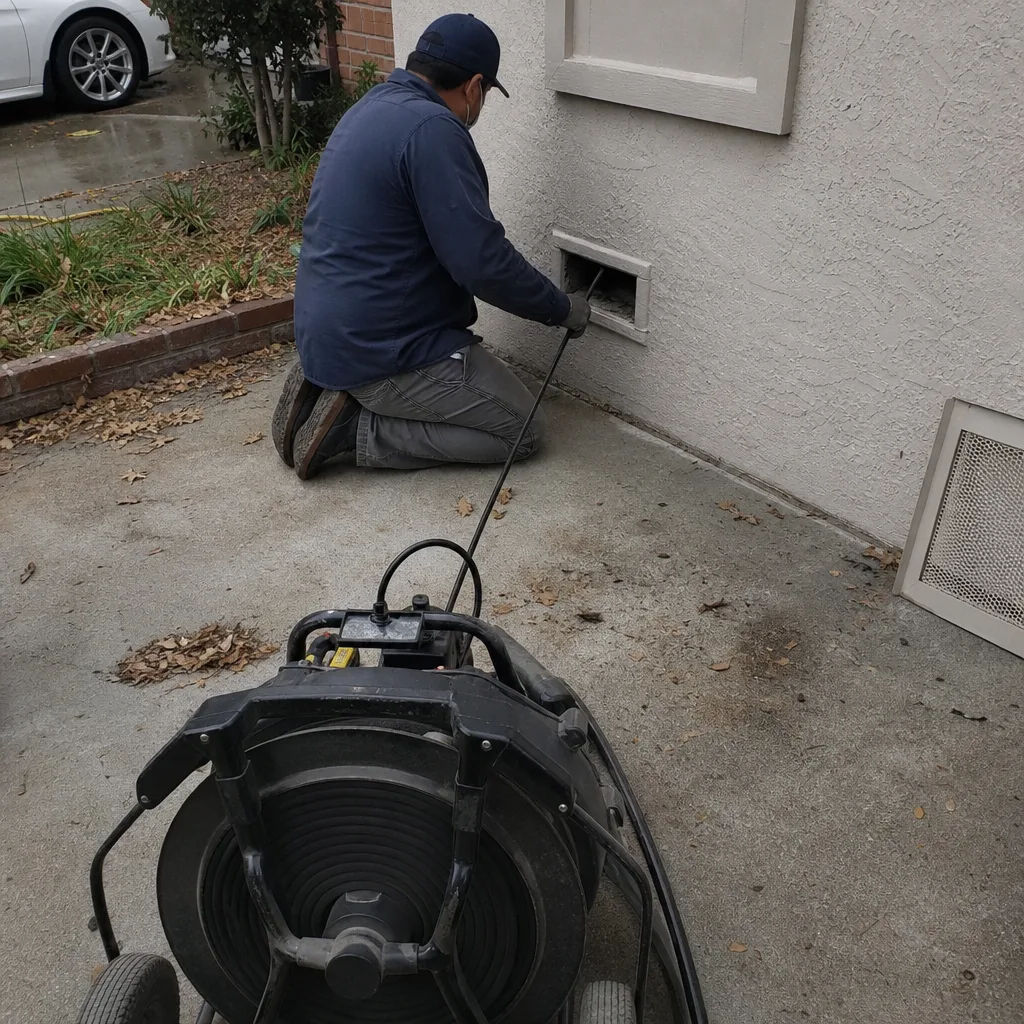
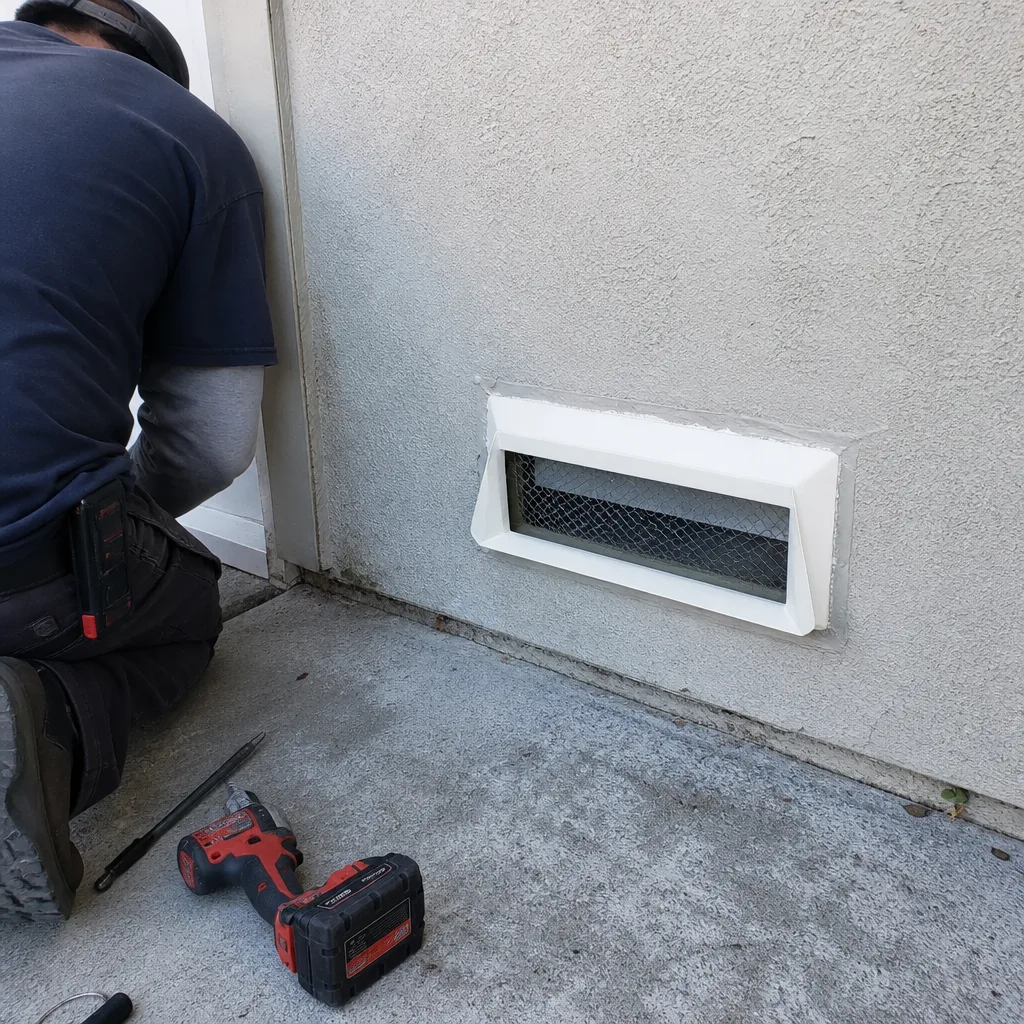
A $25 to $60 dryer vent cleaning kit with a flexible brush rod is a genuinely useful tool. For a dryer vent that runs straight through an exterior wall, meaning a run of 6 feet or less with no bends, that kit does real work. You remove the vent cover, run the brush rod through with a drill, and pull lint out from both ends. In Santa Clara’s older ranch homes and Eichler-style builds, short straight dryer vent runs are common, and this is a maintenance task worth doing annually.
Here’s what a homeowner can realistically do themselves:
- Register and grille cleaning: Remove floor and wall registers, wash them with warm soapy water, and vacuum the visible duct opening down 8 to 12 inches with a crevice tool. This clears the debris you can see and improves airflow immediately.
- Return air filter replacement: Change the filter at the return grille or air handler every 60 to 90 days. In Santa Clara, where wildfire smoke season runs from August through October, a MERV 11 or 13 filter during those months makes a measurable difference. Aprilaire and Honeywell filter housings are common in Santa Clara homes, and both accept standard filter sizes available at any hardware store.
- Dryer vent lint removal for short runs: For straight runs under 6 feet, a brush kit does the job. Anything with a bend, a vertical rise, or a run over 8 feet needs professional pull-through equipment.
- Visible supply plenum cleaning: If you have an exposed plenum in a garage or utility closet, you can wipe down the accessible interior surface with a damp microfiber cloth after changing the filter.
That’s the honest list. Everything beyond these tasks requires equipment that doesn’t exist in a consumer price range, and the rest of this guide explains exactly why.
The Shop Vac Problem: Why CFM and Static Pressure Matter
Here’s the core problem with every DIY duct cleaning method sold to homeowners: a shop vac does not move enough air to clean a duct. It moves enough air to clean the first 2 feet of a duct, and then it creates a condition that redistributes debris deeper into the system.
Professional duct cleaning relies on negative pressure. The professional unit connects to the duct system and pulls air through it at 2,000 to 4,000 cubic feet per minute (CFM). That volume of moving air is what lifts dust, debris, and particulate off the interior walls of the trunk lines and carries it to the collection point.
A typical wet/dry shop vac moves between 100 and 200 CFM at the hose inlet when the filter is clean. Once the filter loads with dust, that number drops off a cliff. But here’s the part that matters more than raw CFM: static pressure. Ducts are enclosed spaces. The air inside a branch duct is relatively still. When you put a low-CFM vacuum at one end of an enclosed duct and agitate the other end with a brush, you’re not pulling debris toward the vacuum. You’re knocking it loose and leaving it suspended in the duct, where the airflow from your HVAC system will carry it to the next room that calls for heat or cooling.
In our experience working in Santa Clara, where a significant share of homes were built between 1950 and 1980, older ductwork compounds this problem. Those systems often have fibrous insulation on the interior of the ducts, which traps debris and requires air velocity that only professional negative-pressure machines can generate. Rodents and pests are also a recurring issue in Santa Clara attics, and the droppings and nesting material they leave behind will not come out with a shop vac, no matter how determined the operator.
When DIY Makes the Problem Worse
There are three specific ways a DIY duct cleaning attempt makes a professional job harder and more expensive, and we’re listing them because we’ve seen each one in Santa Clara homes.
- Compacted debris. When a brush or vacuum attachment pushes dust and debris deeper into a branch duct and then the system runs, that loose material gets driven into the interior insulation or settles into low points in the flex duct. Once compacted, it cannot be removed by brushing alone. It requires agitation tools and higher negative pressure, which adds time to a professional cleaning and can raise the service cost by 15 to 25 percent. The typical consequence: the homeowner didn’t save anything, and the job now costs more than it would have originally.
- Dislodged flex duct connections. This is the expensive one. Flexible duct, which is standard in most Santa Clara homes built after 1990, connects to trunk lines with zip ties or metal band clamps. A rotating brush on a drill, inserted into a branch duct and run at speed, will catch the inner liner of flex duct and tear it or pull it off its connection. A disconnected flex run means your HVAC system is now conditioning the crawlspace or attic instead of the bedroom. You may not notice for months, but your energy bill will. Repairing a dislodged or damaged flex run costs between $200 and $500 in Santa Clara, and air duct repair in Santa Clara is not a service most general HVAC companies offer with any depth.
- Fallen pinch points and kinks. When a homeowner pulls on a vacuum hose inserted into a duct, the hose catches on the inner surface of flex duct and creates kinks. A kinked flex duct reduces airflow to one room by 50 to 80 percent, and it will not straighten itself. A professional with a camera scope can locate these in minutes; a homeowner will spend weeks wondering why one bedroom never gets warm.
The common thread here is that duct systems are more fragile than they look. The parts you can see, the register covers and the first few inches of duct, are robust. The parts you can’t see, the flex runs, the trunk connections, the plenum seams, are delicate in ways that only matter once you’ve disturbed them.
Santa Clara Cost Comparison: DIY vs Professional
Let’s put actual dollar figures on this decision, because the cost question is usually what pushes a Santa Clara homeowner toward a DIY attempt in the first place.
Professional air duct cleaning in Santa Clara typically runs between $350 and $650 for a standard single-family home with one HVAC system, 8 to 15 registers, and 2 returns. Homes with two systems, oversized square footage, or heavy contamination from pets or construction will fall at the higher end of that range or above it. Air duct cleaning in Santa Clara is priced per system, not per vent, which is the honest way to quote it and the way any reputable company will present the estimate.
Here’s the realistic DIY cost picture for a Santa Clara homeowner:
- Dryer vent brush kit: $25 to $60. Effective for straight runs under 6 feet. Worth buying.
- Shop vac with long hose and crevice attachments: $80 to $150 if you don’t already own one. Effective for register openings and visible duct mouths. Not effective for duct interiors.
- “Duct cleaning” attachment kits for drills: $35 to $75. These are dryer vent brushes rebranded for duct use. They will not reach past the first bend in a supply duct, and they will catch on flex duct liners. Save your money.
- Inspection camera rented or purchased: $60 to $200. This is actually useful for looking into a duct before deciding whether it needs attention, but it won’t clean anything.
- Your time: A thorough DIY attempt at register cleaning and short-run maintenance takes 3 to 5 hours. A professional full-system cleaning takes 3 to 6 hours and includes the trunk lines, branch ducts, returns, and plenums you cannot reach.
The math works out like this: for $150 to $250 in tools and an afternoon, you can address the visible surfaces and short runs. For $350 to $650, a professional addresses the entire system. The catch is that the surfaces a homeowner can reach are not the surfaces that matter most. The main trunk line, which moves the most air and accumulates the most debris, is completely inaccessible without professional equipment. The leaky returns in a crawlspace are inaccessible to a homeowner. The branch runs going to the second floor of a Santa Clara two-story are inaccessible, full stop.
What the DIY savings actually buys you, in most cases, is a cleaner-looking register cover and the same dirty trunk line underneath it. That’s not a value trade. That’s a false economy.
The Middle Path: What to Do Before the Pros Arrive
There’s a practical middle path between full DIY and full professional cleaning, and we recommend it to Santa Clara homeowners who want to reduce the scope of a professional visit without compromising the result.
Step 1: Replace the filter before the appointment. A clean filter means the professional can spend time on the ducts instead of working around a clogged filter. It also means the system’s airflow is at baseline when the cleaning starts, which makes the post-cleaning airflow verification more meaningful. If you have a Honeywell or Aprilaire filter cabinet, check the dimensions on the existing filter and match it. Both brands make standard and deep-pleat options, and the wrong size will bypass air around the frame.
Step 2: Clean every register cover in the house. Remove them, wash them, dry them, and leave them off for the appointment. This saves time and allows the professional to access the duct opening directly.
Step 3: Vacuum the visible duct openings as far as you can reach. A crevice tool down 8 to 12 inches gets the debris that would otherwise fall into the duct during the professional cleaning. It’s a small thing, but it reduces the total debris load the professional equipment has to handle.
Step 4: Clear access to the air handler, furnace, and any crawlspace or attic hatch. In Santa Clara homes, air handlers are frequently in garages, attics, or hall closets. The professional needs 3 feet of clear space around the unit and a clear path from the entry point to the equipment.
Step 5: Note any rooms with weak airflow, odd smells, or visible dust. Tell the technician before the cleaning starts. These observations help target the diagnostic process, and Heritage Duct Cleaning’s technicians use them to decide where to focus camera inspection and agitation work.
None of these steps require special equipment or risk to your duct system. They simply reduce the time a professional spends on tasks a homeowner can do, and that keeps the price at the lower end of the Santa Clara range without sacrificing any quality.
Equipment Tiers: What Actually Separates Professional Tools
Professional duct cleaning equipment is not a bigger version of consumer equipment. It’s a different category of machine, built for a different job, and the difference shows up in measurable performance.
We run Rotobrush and Nikro systems, which are the same negative-pressure machines used by restoration and remediation contractors. Those are the companies that show up after a fire or flood and are required to meet insurance-company cleanliness standards, not just homeowner satisfaction. The equipment has to work. It cannot leave debris behind, because a restoration contractor gets paid based on verification, not effort.
Here’s what those systems do that a consumer tool cannot:
- Negative pressure at 2,000+ CFM: The unit connects to the duct system and pulls air through it at a volume that lifts debris off interior surfaces. This is the fundamental mechanism of source-removal cleaning, and it does not work at consumer CFM levels.
- Agitation tools matched to the duct material: Rotating brushes, air whips, and skipper nozzles are sized for metal, flex, and fiberglass duct interiors. Using the wrong tool on the wrong material damages the duct. Using the right tool shears debris without harming the surface.
- HEPA-filtered exhaust: Professional units capture what they pull out. The exhaust air is filtered to 0.3 microns, which matters in a Santa Clara home where you don’t want the cleaning process blowing attic dust into the living room.
- Camera inspection capability: Before and after verification is the difference between a professional job and a guess. A camera scope shows what the ducts looked like and what they look like when the job is done. We can hand a homeowner before-and-after video or stills, which answers the “how do I know it was actually done” question with evidence instead of reassurance.
We also carry Abatement Technologies equipment in our service toolkit. That gear is built for contamination and remediation-level work, and while most Santa Clara homes don’t need remediation, having the capability means the equipment range covers the full spectrum from routine cleaning to heavy debris loads, post-construction dust, and pet-dander-saturated returns.
Our technicians are trained on Honeywell and Aprilaire systems, which accounts for a large share of the residential filtration and air quality equipment installed in Santa Clara homes. Understanding the full air pathway, from the return grille through the filter cabinet, the blower, the trunk line, and the branch runs, lets us diagnose airflow problems that a duct-only company would miss.
Common Mistakes to Avoid
- Using a drill brush on flex duct. Flex duct liners tear. Once torn, the duct must be replaced or repaired, and that cost exceeds what a professional cleaning would have cost in the first place. We see this most often in Santa Clara homes built in the 1990s and 2000s, where flex duct is everywhere.
- Pushing a vacuum hose into a branch duct as far as it will go. The hose kinks the flex duct, or it reaches a bend and dislodges a connection. Pulling it back out often separates the duct from the boot. Now you have a leak inside the wall cavity, and you won’t know until the room stops getting air.
- Believing a “duct cleaning” attachment kit is the same as professional equipment. These kits are rebadged dryer vent brushes with a shorter rod and a different label. They reach 6 to 10 feet into a straight duct and stop at the first bend. Most Santa Clara supply runs are longer than that and have at least one turn.
- Skipping the dryer vent because “the dryer still works.” A clogged dryer vent does not announce itself. It reduces drying efficiency for months, then it overheats. Dryer vent cleaning in Santa Clara costs $85 to $150 and should be done every 12 to 24 months, more often if the vent run is long or bends. The appliance working is not evidence that the vent is clear.
- Cleaning ducts in a home with asbestos-containing insulation without testing first. Some Santa Clara homes built before 1980 have asbestos-containing tape or insulation on ductwork. Disturbing it with a brush is a serious health risk. If you’re not sure, do not touch it. Have it tested before any cleaning work begins.
- Treating visible dust at the register as proof the whole system is dirty. Dust at the register is normal in a Santa Clara home, especially during wildfire season or when windows are open. It’s a sign that the register area needs cleaning, not proof that the trunk line is loaded. Conversely, a clean-looking register cover does not mean the trunk is clean. Camera inspection is the only way to know.
- Hiring the cheapest company because “it’s just air ducts.” Duct cleaning has a well-earned reputation for bait-and-switch pricing and low-effort work. The $49 whole-house coupon becomes a $900 invoice once the technician arrives. Honest companies quote per system, not per vent, and can show you the equipment they use before they arrive. At Heritage Duct Cleaning, we agree on one flat price per system before work starts, and that’s the price you pay.
When to Call a Professional
Call a professional when the problem is beyond the first 3 feet of duct. If you can see dust, debris, or pet hair at the register opening and that same material appears in rooms across the house, the trunk line needs source-removal cleaning. If you just completed a renovation in Santa Clara and drywall dust is appearing at registers, that dust is throughout the system, not just at the openings. If a home inspection flagged duct contamination before a sale, that finding needs professional documentation for the transaction. If you smell mold or mustiness when the system runs, do not brush the ducts; have them camera-inspected first. Heritage Duct Cleaning offers free estimates in Santa Clara; call (855) 550-3778 and we’ll inspect the system and tell you honestly what needs doing and what doesn’t.
Frequently Asked Questions
Professional air duct cleaning in Santa Clara typically costs between $350 and $650 for a single-family home with one HVAC system, depending on system size, contamination level, and accessibility. Homes with two systems or heavy debris loads will price above that range. Reputable companies quote per system, not per vent, and the price is agreed before work starts; call (855) 550-3778 for a free estimate on your specific system.
No, a shop vac cannot clean the interior of an air duct system. A shop vac moves 100 to 200 CFM, while professional negative-pressure units move 2,000 to 4,000 CFM, and that lower airflow knocks debris loose without carrying it out of the system. The result is debris suspended in the ducts that redistributes throughout the house when the HVAC system next runs.
Cheap duct cleaning quotes almost always reflect either per-vent pricing that multiplies quickly once the technician arrives, or a low-effort method that only cleans visible register openings and skips the trunk lines and branch runs. The industry’s bait-and-switch pricing model is well documented: a low coupon price becomes a much larger invoice once the van is in the driveway. Heritage Duct Cleaning quotes one flat price per system before work starts, and that’s the price you pay.
Demand before-and-after camera documentation. Any professional company using negative-pressure equipment can show you video or still images of the duct interior before and after the cleaning. If a company cannot provide this, you have no evidence that the trunk lines were touched at all. We show every Santa Clara homeowner before-and-after visuals of their own system as standard practice.
Every 3 to 5 years is the honest interval for most Santa Clara homes, with two exceptions: homes with multiple pets or residents with allergies will benefit from a 2 to 3 year interval, and homes that have just completed a renovation should be cleaned immediately after construction, regardless of the last cleaning date. Wildfire season in Santa Clara runs from August through October, and homes near the hills see elevated particulate levels during those months; changing filters monthly during that window is more impactful than cleaning ducts more often. See our Seasonal Air Duct Cleaning Care for Santa Clara: Year-Round Homeowner’s Guide for the full seasonal schedule.
Yes, cleaning register covers and the visible duct openings is legitimate maintenance that extends the time between professional cleanings and improves immediate airflow. It does not replace a professional cleaning, because the trunk lines and branch ducts that hold the majority of debris remain untouched, but it’s a useful routine task for any Santa Clara homeowner to do quarterly.
The Bottom Line
The DIY versus professional question for Santa Clara homeowners comes down to this: the parts of your duct system you can reach are not the parts that matter. Register covers, visible duct openings, and short straight dryer vents are fair game for homeowner maintenance, and doing that work well can stretch the interval between professional cleanings. But the main trunk line, the branch runs, and the returns that move most of your air are only accessible with negative-pressure equipment that doesn’t exist below a professional price point. Attempting those areas with consumer tools does not save money; it either does nothing or creates damage that costs more to repair than a cleaning would have cost in the first place. For everything beyond the first few feet of a register, call a professional who can show you the work was done. Find more guides & resources on maintaining your home’s air quality.
Written by the team at Heritage Duct Cleaning, serving Santa Clara since 2015.
See the difference
 Before
 After
 Before
 After
 Before
 After